What’s cold mill roll maintenance, anyway? If you’re running a steel mill or working with cold rolling operations, you’ve probably heard the phrase thrown around—but it’s way more than just “keeping rolls clean.” As a mill rolls supplier, I see guys cut corners on this all the time, and 9 times out of 10, that leads to premature roll failure, off-quality coils, or even unplanned downtime that costs way more than fixing the rolls right would have. Let’s break this down like I’d explain it to a buddy on the mill floor—no stuffy engineering jargon, just the real deal. Mill Rolls
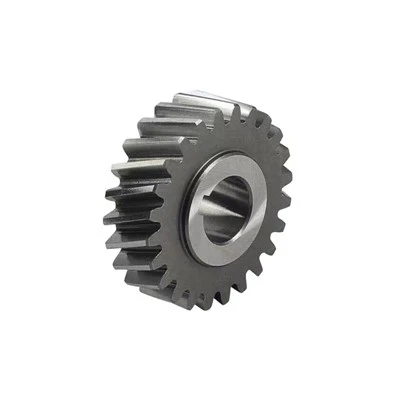
First, let’s get what cold mill rolls actually do straight, ‘cause you can’t maintain something if you don’t know its job. Cold rolling is when you take hot-rolled steel (that’s the thick, hot stuff straight from the mill) and run it through a series of rolls to squeeze it thinner, smoother, and stronger—all at room temperature, no heat. Those rolls are under insane pressure: thousands of pounds of force, spinning at hundreds of RPM, rubbing against steel that’s got a mind of its own. Every little imperfection on the roll surface transfers straight to the steel coil, right down to the customer’s finished part. So maintenance here isn’t about making rolls last longer (though that’s a bonus)—it’s about keeping the rolls working exactly like they’re supposed to, every single pass.
Most folks split cold mill roll maintenance into two main buckets: corrective and preventive. Corrective is the “oops” stuff—fixing a roll after it’s already messed up. That’s the reactive garbage no one wants to deal with. Preventive is the pro move: checking, fixing, and prepping rolls before they cause problems. Let’s dive into both, ‘cause neither gets skipped on our line of rolls.
First, preventive maintenance. This is the routine stuff you do every shift, every week, every month, to stop issues before they start. Let’s start with the daily checks ‘cause that’s the stuff the mill operators are on top of. First thing every shift, you gotta clean the rolls. Wait, not just wipe ‘em down—cold rolling leaves all kinds of gunk: mill scale (tiny metal chips), rolling oil residue, even little bits of lubricant that build up on the roll surface. If that gunk hardens (and it does, fast), it creates bumps on the roll. Those bumps transfer to the steel, making it have lines or blemishes that get it rejected. How do we clean rolls? We use a combination of high-pressure air, soft-bristle brushes (no metal ones—they scratch the roll!), and sometimes a mild, non-abrasive detergent. We tell our customers to do this every time they switch coil grades or every 10 coils, whichever comes first. I’ve seen a mill skip this once, and they had 20 coils scrapped in a single day. That’s way more than the cost of a roll cleaning kit.
Next up, weekly checks for roll alignment and surface condition. Alignment is huge. If two rolls aren’t perfectly straight, they’ll wear unevenly—one side gets way more beat up than the other, leading to a wobbly coil or even a roll breaking mid-pass. How do you check alignment? Most mills use a dial indicator, nothing fancy, but you have to do it when the rolls are cold, ‘cause when they spin, heat from friction throws the numbers off. We also check for “roll chatter”—that’s a weird vibration that makes a repeating pattern on the steel, like tiny waves. Chatter usually comes from worn-out roll bearings, or the roll itself having a slight roundness issue. If you catch that early, you can just replace the bearings instead of the whole roll, which saves a ton of cash.
Monthly preventive stuff: dimensional checks and surface profiling. Cold mill rolls are ground to super specific tolerances—like, within a thousandth of an inch. That’s tiny. Over time, even with cleaning and alignment, the roll’s surface wears down, so its diameter changes slightly. If the diameter is off, the gap between rolls is wrong, so the steel isn’t rolled to the correct thickness. We use a micrometer or a roll camber gauge to measure the diameter at a few points along the roll. If it’s more than, say, 0.002 inches off from spec, it’s time for a grind. Also, we check the roll’s surface finish. If it’s too rough, it’ll drag on the steel, causing work hardening that makes the coil brittle. If it’s too smooth, the lubricant doesn’t stick right, leading to slippage and uneven rolling. We usually tell customers to shoot for a surface roughness of 0.8 to 1.6 Ra, depending on the steel grade they’re rolling.
Now, corrective maintenance—this is when the roll’s already got a problem, so you fix it fast. The most common issue we see is roll damage: scratches, dents, or thermal cracks. Scratches usually come from foreign material—like a loose bolt from the mill machine, or a piece of scale that falls onto the roll gap. Dents are from dropping rolls during handling, which happens way more than it should (guys, lift with the cranes, not with your bare hands). Thermal cracks are a big one—they happen when the roll gets super hot from friction, then cools down fast when you shut the mill, leading to tiny cracks on the surface. Those cracks will get bigger every time you run the roll, until it breaks. How do we fix these? If the damage is minor (a small scratch or tiny crack), we can do a “micro-grind”—that’s a super light grind, removing only a few thousandths of an inch, just to smooth the surface. If the damage is worse, we have to do a full body grind, which brings the roll back to its original diameter and profile. If the damage is super bad, we might have to recondition the roll, which is like a full overhaul, including re-profiling and heat-treating the surface to make it harder.
Wait, another thing people forget: roll storage. A roll that’s not being used isn’t a “set it and forget it” part. If you leave a roll sitting around, it can develop “roll flatness issues” from sitting on a hard surface too long, or rust if it’s not properly coated. We always tell customers to store rolls on soft, padded racks, not concrete floors, and to cover them with a corrosion-resistant film if they’re going to be idle for more than a couple weeks. I once had a customer call us panicking ‘cause a roll he’d stored for 6 months was all rusted on one side—he ended up having to get it reconditioned, which cost him twice as much as if he’d stored it right.
Now, why does this matter to you? Let’s talk numbers. A good cold mill roll from a supplier like us (wink, that’s us) costs, on average, a few thousand bucks, depending on size and material. But if you skip maintenance, you could have a roll fail every 2 weeks instead of every 2 months. That’s 4 extra rolls a year, which is a few grand out of your pocket. But worse, the downtime: when a roll fails, you have to shut the mill down, pull the old roll out, put a new one in, check alignment, test it. That’s 4 to 8 hours of downtime, easy. For most mills, that’s tens of thousands of dollars in lost production per hour. Plus, you’re scrapping coils—each rejected coil is thousands of pounds of steel, lost labor, and wasted material. We had a customer last year who skipped 3 months of preventive checks, and they had 12 coils scrapped, plus 3 days of downtime. The total cost? Over $150k. If they’d spent $2k a month on preventive maintenance, they would have avoided all that.
Wait, common myths I hear all the time. First: “New rolls never need maintenance.” No way. Even the best ground rolls will wear, get gunked up, and get damaged over time. We supply a lot of new rolls, and half the time, the problem isn’t the roll—it’s the way they’re maintained. Second: “A light grind every few weeks is fine.” No, actually, grinding too often (or too much) wears out the roll’s outer layer, which is the hard, heat-treated stuff that makes it last. If you grind more than once every 3 to 6 months, depending on usage, you’re shortening the roll’s lifespan. Third: “Cleaning rolls with any rough material is okay.” Not true—even a steel wool pad can scratch a roll’s surface, leading to blemishes on the steel. Stick to the soft brushes we recommend.
Another big part of maintenance is lubrication. Wait, rolling oil isn’t just for cooling— it’s part of the maintenance. If your lubrication system is broken, the rolls will rub too hard against the steel, causing more wear, more chatter, and more thermal cracks. We always check that the customer’s lube system is delivering the right amount of oil, at the right pressure, before they run a new roll. If the lube is too thin, it won’t protect the roll. If it’s too thick, it builds up on the surface, leading to that gunk we talked about earlier.
So, putting it all together: cold mill roll maintenance isn’t a one-time thing, it’s a continuous process. It’s not just cleaning and grinding—it’s checking alignment, monitoring surface condition, storing rolls right, keeping your lube system working, and fixing issues fast before they blow up. As someone who’s been supplying mill rolls for years, I see the guys who take this seriously and the ones who don’t. The ones who do? They have way less downtime, fewer scrapped coils, and their rolls last 2 to 3 times longer than the guys who cut corners.
If you’re running into roll issues—premature failure, blemished coils, unplanned downtime—and your current maintenance routine isn’t cutting it, hit us up. We don’t just sell rolls—we help you figure out the right maintenance schedule for your specific mill, your steel grades, and your output. We’ll walk you through daily checks, how often to grind, even how to store rolls so they don’t go bad sitting on the shelf. No sales pitch, just real advice from guys who know the mill floor like the back of their hand.

Don’t wait until you have a 3-day shutdown ‘cause a roll broke. Reach out, and we’ll make sure your cold mill rolls last longer, work better, and save you cash in the long run.
Reheating Furnace Heat Resistant Wear Spare Parts References
- Steel Mill Engineering Handbook, Volume 3: Cold Rolling and Finishing, American Iron and Steel Institute, 2021
- Modern Cold Rolling Practice, International Federation for Steel, 2019
- Mill Roll Maintenance Best Practices, Association of Steel Processing Suppliers, 2022
- Roll Technology for Cold Rolling, Tata Steel Research and Development, 2020
- Preventive Maintenance for Industrial Mill Equipment, Industrial Maintenance Magazine, 2023
Jingjiang Jingyi Metallurgical Technology Co., Ltd.
With abundant experience, we are one of the most reliable mill rolls manufacturers and suppliers in China. We warmly welcome you to wholesale customized mill rolls made in China here from our factory. If you have any enquiry about quotation, please feel free to email us.
Address: No.5 Jianghe Road, Xinqiao Town, Jingjiang City, Jiangsu Province
E-mail: Lcbin1974@163.com
WebSite: https://www.jymetallurgical.com/
