Hey everyone, BA15S

If you’ve been around automotive lighting, RV mods, or general electrical projects, you’ve definitely seen BA15S bulbs everywhere—they’re the little workhorses that power everything from dome lights to turn signal indicators. But over the years, I’ve lost count of how many times fellow techs, small business owners, and DIYers have slid into my DMs as a BA15S supplier and asked: “Wait, can a BA15S bulb actually work on both 12V and 24V systems?” It’s a question that’s way trickier than it sounds, and way more people get it wrong than you’d think. Let’s break this down like we’re geeking out over a late-night auto shop chat, no stuffy jargon required.
First, let’s start with the basics so we’re all on the same page. A BA15S bulb is a single-contact bayonet-style bulb—you know, the one with the flat base and two metal pins sticking out, designed to twist-lock into the socket. The “15” refers to the bayonet base diameter (15mm, for anyone who cares), and the “S” means single contact on the bottom, so only one electrical connection there. Now, the part no one talks about: the voltage rating printed on every BA15S bulb. Most standard ones you’ll find on the market are marked either 12V or 24V, right? But why does that matter, and can you cross them?
Let’s say you grab a 12V BA15S and pop it into a 24V system. First, what happens? Your 24V system is basically two 12V batteries wired in series, so the total voltage is double what the bulb was built for. The bulb’s filament is made to resist and dissipate a specific amount of power—for a 12V 5W BA15S, that’s P = V²/R, so R = (12²)/5 = 28.8 ohms. Plug that into a 24V system, and power becomes (24²)/28.8 = 20W. Suddenly, the filament is running 4x the power it was designed for. What does that look like? It’ll light up super bright for a second, maybe even look cool, but that filament is going to overheat instantly. Most of the time, it’ll burn out in minutes—sometimes even seconds. I’ve had customers send back bulbs that melted the socket just from testing this, and honestly, that’s the nice outcome. On the worst end, the overheated filament can cause a short circuit, which blows fuses or even sparks if the wiring is old.
Okay, so what about the flip side: using a 24V BA15S on a 12V system? That’s not quite as dramatic, but it’s not great either. Let’s do the math again for a 24V 5W bulb: R = (24²)/5 = 115.2 ohms. Plug into 12V, power becomes (12²)/115.2 = 1.25W. So the filament is only putting out 25% of the power it was meant for. That means the light is dim—like, “can barely see a door ajar” dim. Also, filament lifespan? Way longer, but who cares if you can’t even tell the bulb is on? I once had a customer who tried this on his RV’s interior lights and ended up replacing three bulbs because he thought they were dead when he just installed the wrong voltage. Total mess.
But wait—before you go throwing all your 12V and 24V BA15S bulbs in separate bins, there’s a middle ground. Not every BA15S is strictly locked into one voltage. A lot of LED BA15S bulbs (the ones that are replacing old incandescents these days) are designed for “universal” 12V-24V compatibility. Why? Because LEDs work way differently than incandescents. Incandescents rely on a filament’s resistance to dissipate power, but LEDs are diodes, so they need a circuit driver that regulates the voltage and current. Good universal BA15S LEDs have internal drivers that can handle a range from, say, 9V to 30V, so they work on both standard 12V car systems, 24V heavy-duty trucks, even some RVs that mix battery setups.
But here’s the catch—universal doesn’t mean “perfect for every use.” I’ve tested cheap universal BA15S LEDs from random no-name brands, and a lot of them cut corners on drivers. Put one of those in a 24V system, and even if it says it’s universal, it might fry instantly. Or if the driver is bad, the LED might flicker like a broken street light, or burn out in a week. That’s why as a BA15S supplier, I always tell people to check the driver specs, not just the label. A real universal LED will list its input voltage range clearly—usually 9-32V or something similar—so you don’t have to guess.
Now, let’s talk about real-world use cases, because this isn’t just a physics problem. If you’re a truck owner driving a semi (that uses 24V) and you need a turn signal bulb, you can’t just grab a 12V BA15S. I’ve seen semi drivers try that, and they end up stranded on the side of the highway when the bulb burns out in the middle of a run. The same goes for RV owners who have a 12V system with a 24V battery bank for solar—you’ll want that universal LED instead of mixing bulb types. For small projects, like a 12V motorcycle dome light, a standard 12V BA15S works fine, and it’ll be cheaper than a universal one.
Another thing a lot of people miss: voltage isn’t the only factor. The wattage of the bulb matters too. A 12V 10W BA15S will act differently than a 12V 2W one when swapped into a 24V system. Lower-wattage incandescents might burn out faster because their filaments are thinner, while higher-wattage ones might hold on a little longer, but again, it’s never a good idea. I once had a construction company order 50 12V BA15S for their 24V utility trucks, and we warned them it would be a bad idea—they laughed, went through all 50 in a month, and came back ordering the correct 24V ones. Lesson learned, right?
Wait, what about older systems that might have voltage drops? Like, a truck that runs 24V at the battery, but the wiring drop makes the actual voltage at the bulb 21V instead of 24V. Does that change anything? A little, but not enough to justify mixing bulbs. The filament is still built for a specific voltage, so even a 3V drop from 24V won’t make a 12V bulb work reliably. It’ll still be over-stressed, just a little slower to burn out.
Now, if you’re someone who’s trying to source BA15S bulbs and you’re not sure which one to get, let’s make this simple. Ask yourself: What system is this going into? If it’s a standard passenger car, motorcycle, or small RV (12V), get a 12V BA15S—incandescent or LED, either works, just make sure it’s labeled for 12V. If it’s a semi, utility truck, or heavy equipment (24V), get a 24V BA15S, or a universal LED if you want extra durability. If your setup is a mix—like an RV that has a 12V accessory system but a 24V solar bank for charging—go with a true universal LED BA15S, and double-check the input range to make sure it covers both.
As a BA15S supplier, I see all kinds of mistakes, but the voltage mix-up is the most common. It’s not like buying the wrong size screw, where it just doesn’t fit—this is about electrical safety and performance. A burnt-out turn signal bulb isn’t just inconvenient; it’s a safety hazard. I’d rather someone take two seconds to check their system voltage than deal with a crash because their light died on the highway.
Oh, and one last myth to bust: Some people think you can add a resistor to a 12V BA15S to make it work on 24V. Technically, that works—resistors drop voltage. But here’s the problem: you have to calculate the right resistor, and most DIYers mess this up. If you pick a resistor that’s too big, the bulb will be dim; too small, and it’ll still overheat. Also, resistors get really hot, so if you install it in a tight socket or near plastic wiring, you could melt something. It’s not worth the hassle. Just buy the right bulb. Save yourself the time, money, and possible fire hazard.
So to circle back to the original question: Can a BA15S work on 12V and 24V systems? The short answer is, not unless it’s specifically designed for universal voltage. Standard 12V or 24V BA15S bulbs are built for one system only, and mixing them will lead to either dim light or burnt-out bulbs (or worse). But with the rise of LED BA15S bulbs, there are options that do work across both voltages, as long as you get a quality one from a trusted brand.
Whether you’re a hobbyist working on a tiny car project, a fleet manager sourcing bulbs for 100 trucks, or just someone replacing a broken dome light, don’t sleep on the voltage rating on your BA15S. It might seem like a tiny detail, but it’s the difference between a bulb that lasts a year and one that dies in a week, or between a light that works and a light that leaves you stuck.
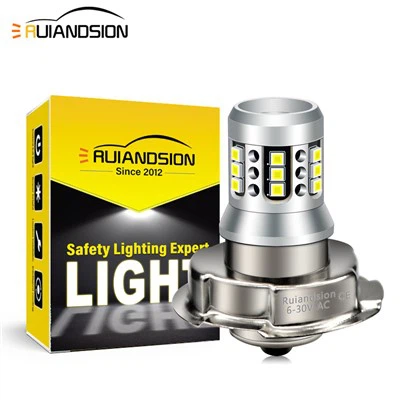
If you’re in the market for BA15S bulbs—whether you need 12V, 24V, or universal LEDs—hit me up to chat through your specific setup and get exactly what works for you. No generic sales pitches, just straight advice from someone who’s been in the lighting game for years, testing bulbs and helping people avoid the mistakes I’ve seen a hundred times over.
9005 / HB3 References
- Automotive Lighting Engineering Handbook, Society of Automotive Engineers, 2021
- LED Bulb Voltage Compatibility Guide, International Association of Lighting Designers, 2022
- BA15S Base Specification, International Electrotechnical Commission Standard 60061-1, 2020
Guangzhou Ruiandsion Lighting Technology Co., Ltd.
Guangzhou Ruiandsion Lighting Technology Co., Ltd. is well-known as one of the leading ba15s manufacturers and suppliers in China. If you’re going to wholesale high quality ba15s, welcome to get free sample from our factory. Also, customized service is available.
Address: Building 9,Jiuwu Technology Park,No.6 Baishan Road
E-mail: Ruiandsion@gmail.com
WebSite: https://www.ledruiandsion.com/
