If you’ve ever ordered groceries, picked up a package of new clothes, or carried a stack of supplies from a hardware store, chances are you’ve held a high-density polyethylene (HDPE) bag in your hands. As an HDPE bag supplier, I get asked all the time how these ubiquitous, lightweight, and durable bags go from a pile of plastic resin pellets to the flexible, tear-resistant bags we rely on daily. It’s not just a random molding process—it’s a precise, step-by-step manufacturing workflow that balances material science, quality control, and efficiency. I’ve walked through this process countless times on the factory floor, so let me break it down in plain, honest terms, no overly complicated jargon, just what actually happens from start to finish. HDPE Bag

First, let’s start with the raw material, because HDPE isn’t just “plastic” to us. HDPE is a thermoplastic polymer made from petroleum (or, increasingly, post-consumer recycled plastic, which is a big focus for many of our clients looking to reduce their environmental footprint) and comes as small, uniform pellets, often called “resin.” The key to HDPE’s strength is its molecular structure: the polymer chains are tightly packed together, unlike lower-density polyethylene, which has looser, more spaced-out chains. That tight packing is why HDPE bags resist tears, punctures, and even moisture better than thinner plastics. We source our resin from suppliers that grade it specifically for bag manufacturing—so it’s not the same resin used for water pipes or milk jugs, which have different melting points and rigidity requirements. Some clients request virgin resin, which is 100% new, for applications where hygiene or consistent color is critical, while others ask for 10%, 30%, or even 100% post-consumer recycled (PCR) resin, and we tailor the mix accordingly during the next step: mixing.
Before the resin goes into any machinery, we adjust it to match the client’s specific needs. This is where colorants, additives, and modifiers are added. For example, a retail store might want bright red or blue shopping bags, so we add pigment masterbatch in the exact shade they specify. Additives serve practical purposes too: UV stabilizers to keep bags from breaking down when left outside for long periods (great for outdoor events or construction supplies), anti-static agents to prevent static cling, which is important for electronics packaging, and slip agents to make the bags easy to open without sticking together. We test every mix here to make sure the color is consistent and the additives don’t weaken the plastic—no shortcuts here, because a bag that tears in transit is a waste of material and a headache for our clients.
Next, the most critical step in HDPE bag manufacturing: extrusion. This is where solid pellets turn into a continuous tube of plastic. The process starts with a large extruder, a heavy-duty machine with a rotating screw inside a heated barrel. The pellets are fed into the hopper at the top of the extruder, and the screw pushes them through the barrel, which is heated to between 200°C and 280°C (around 390°F to 535°F)—hot enough to melt the HDPE without burning it. The barrel is divided into temperature zones, and we closely monitor each zone to avoid overheating, which would make the plastic brittle. As the molten plastic moves through the screw, it’s compressed and mixed thoroughly, so the colorants and additives are evenly distributed, no streaks or inconsistencies.
At the end of the extruder is a die, a circular metal tool that shapes the molten plastic into a thin, continuous tube, called a “bubble” or a “film extrudate.” Right as the tube exits the die, we blow air into the center of it, inflating the tube like a giant balloon until it’s 2 to 10 times the diameter of the die. This is called blown film extrusion, and it’s what gives HDPE bags their flexibility and strength. The inflation is carefully controlled—too little air, and the film is too thick and stiff; too much, and it’s too thin and prone to tearing. We measure the thickness of the bubble as it forms, usually between 0.01mm and 0.1mm depending on the bag’s purpose (grocery store bags are thinner, heavy-duty construction bags are thicker).
As the inflated bubble moves up from the die, it cools rapidly with a ring of air around it, solidifying the plastic into a thin, clear tube. Once cooled, the bubble is collapsed into a flat tube by a set of rollers above, then fed into a series of rollers that pull the film at a consistent speed. This speed is matched to the inflation and cooling rate to make sure the film’s dimensions stay uniform. If the rollers pull too fast, the film stretches and becomes thinner; too slow, and it piles up and gets wrinkled. It’s a delicate balance that our factory teams adjust daily, especially when switching between different bag sizes or resin mixes.
Now we have a flat, continuous tube of HDPE film, but it’s still just a plain plastic sheet—we need to turn it into actual bags. That happens on a bag machine, which cuts the film into individual bags and adds any features like handles, printing, or gussets. Gussets are the folded sides at the bottom of the bag that let it expand to hold more items; they’re super common for shopping bags, trash bags, and produce bags. The bag machine feeds the flat film tube into a set of folding jaws that create the gussets, then it seals the bottom of each bag. Sealing is done with heat seals or pressure seals—for HDPE, heat sealing is most common because it melts the edges of the film together tightly, so the bag doesn’t leak or split when filled. We test each seal to make sure it’s strong; sometimes we do a pull test, pulling the bag open until the seal breaks, to make sure it meets our standards.
Once the bottom is sealed, the machine cuts each individual bag from the continuous tube. The cut is done with a sharp blade that trims along the top edge of the sealed bottom, so each bag is a separate unit. Then comes any custom features: handles. For loop handles, common on shopping bags, the machine cuts two holes in the top of the bag, feeds pre-formed plastic loops through the holes, and secures them with heat or adhesive. For drawstring bags, we add a pocket at the top to hold the drawstring. If the client wants their logo printed on the bags, this is the step where flexographic printing or rotogravure printing is applied. We usually print up to 8 colors, and the printing is done with water-based inks these days, which are more environmentally friendly than solvent-based inks. We run a test print every time we change a design to make sure the colors are accurate and the print adheres well to the HDPE film, no smudges or fading.
After the bags are printed, sealed, and cut, they’re stacked into rolls or flat packs, depending on what the client needs. Some clients buy bags on rolls for easy dispensing at checkout counters, others buy them flat for storage or manual handling. We count the bags to make sure the roll has the exact number requested—usually 1,000, 2,000, or 5,000 bags per roll—and then the rolls are wrapped in protective plastic to keep them clean and undamaged during shipping.
But manufacturing doesn’t end at wrapping. Quality control is a huge part of what we do as a supplier. Every batch of HDPE bags goes through a series of checks before it leaves the factory. We inspect for defects: thin spots in the film, weak seals, misprinted logos, broken handles. We also test the strength of the bags—how much weight they can hold before tearing. For example, a grocery bag should hold at least 25 pounds without failing, so we do random weight tests on every batch. We also check for consistency across batches, because a client can’t have one batch of bags that tears easily and the next that’s too thick and expensive. If any batch doesn’t meet our standards, we pull it aside, adjust the process, and rework it—no exceptions, because our reputation depends on delivering reliable products.
Over the years, the industry has shifted toward more sustainable practices, and that’s something we’ve embraced fully as an HDPE bag supplier. Many of our clients are asking for PCR resin, which is made from post-consumer plastic bottles, jugs, and other HDPE items that would otherwise end up in landfills. Using PCR resin doesn’t mean the bags are weaker—modern recycling processes purify the plastic, so the strength is almost on par with virgin resin. We’ve also switched to more efficient machinery that uses less energy, and we’ve reduced waste by recycling any offcuts or defective film back into the resin mix, so very little material goes to waste.
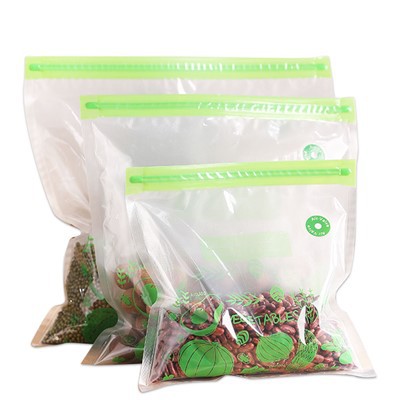
I know that for a lot of businesses, choosing an HDPE bag supplier is about more than just price—it’s about getting a product that works for their specific use case, delivered on time, and supported by a team that understands the manufacturing process. If you’re in need of HDPE bags for your retail store, restaurant, construction site, or any other application, we can work with you to customize the size, strength, color, print, and even recycled content to fit your needs. We offer flexible order sizes, competitive pricing, and consistent quality, backed by years of experience in the industry. If you’d like to discuss your requirements or get a quote, please reach out to our team to start a conversation.
HDPE Bag References:
- "Blown Film Extrusion for Polyethylene Films" – American Plastics Council
- "High-Density Polyethylene (HDPE) Properties and Applications" – Society of Plastics Engineers
- "Sustainable Practices in HDPE Packaging Manufacturing" – Institute of Packaging Professionals
Tongcheng Xurun Plastic Industry Co., Ltd.
As one of the most professional HDPE bag manufacturers in China, we offer a wide range of products with superior quality. Please feel free to wholesale bulk customized HDPE bag at low price from our factory. For quotation, contact us now.
Address: Shuanggang Town Industrial Park, Tongcheng City, Anqing City, Anhui Province
E-mail: 15955605705@163.com
WebSite: https://www.cnxurun.com/
