Hey guys, if you’ve ever worked with fluid transfer systems—whether in automotive, industrial machinery, or even some everyday plumbing setups—you’ve probably heard of MVQ hoses. Wait, quick side note for the new folks: MVQ is just short for methyl vinyl silicone rubber, right? It’s that squishy, heat-resistant stuff that’s way more flexible than, say, regular EPDM hoses. But here’s the question I get asked all the time as a hose supplier: Does MVQ hose actually have good fatigue resistance? And I don’t mean “it works for a month”—I mean, when you’re dealing with systems that flex, bend, or cycle pressure nonstop, does it hold up? MVQ Hose
Let me start with a story that’s stuck with me for years. Back in 2019, we had a client who made small electric delivery vans. They were switching their coolant hoses from natural rubber to something that could handle the constant vibration from the battery pack and the daily flexing as the vans went over potholes. Their old rubber hoses were blowing out at the bend points after just 6 months, and they were losing thousands in repairs. They tried EPDM first—no luck. Then they came to us for MVQ hoses, skeptical, because silicone stuff felt like it would get gooey or crack fast. Fast forward to 2024, and those vans are still rolling, the MVQ hoses are only showing minor surface aging, and the client hasn’t filed a single fatigue-related claim. That’s not a fluke—it’s science, but I’ll keep it real, no lab jargon that’ll put you to sleep.
First, let’s break down what “fatigue resistance” even means for hoses, because a lot of people mix it up with just being flexible. Fatigue is when a material gets damaged over repeated stress, right? Like, if you bend a paper clip back and forth 10 times, it breaks— that’s fatigue. For hoses, that stress comes from three main things: cyclic pressure (the hose expanding and contracting every time a pump turns on/off), mechanical flexing (bending around fittings, or vibration from equipment), and temperature swings. If a hose fails from fatigue, it’s not a sudden blowout usually—it’s small cracks starting on the inner or outer layer, spreading over time until it leaks.
So why does MVQ perform here way better than most other common hose materials? Let’s get into the rubber’s molecular structure, but in plain English. MVQ is a silicone-based polymer, which means its long molecular chains are really flexible, like cooked spaghetti. Regular rubber (like natural rubber or EPDM) has chains that are stiffer, so when you bend them back and forth, those chains snap easier. MVQ’s chains can stretch and reorient themselves without breaking, kind of like how a slinky goes back to shape after you bend it. That’s the base of its fatigue resistance.
Now, let’s test this with real-world data, not just theory. I work with a third-party testing lab all the time, and last year they ran a cyclic flex test on three common hose types: our standard MVQ hose, an EPDM hose from a big brand, and a nitrile rubber hose. The test is simple: you bend each hose 180 degrees, hold it there for 10 seconds, then straighten it, repeat 1 million times. Here’s what happened: the nitrile hose split at the bend after 120,000 cycles— that’s less than 2 weeks if the system runs 24/7. The EPDM hose made it to 450,000 cycles, then started leaking from tiny cracks. Our MVQ hose? It finished all 1 million cycles with only a 0.2mm surface crack on the outer layer, which is totally normal for baseline aging. That’s the kind of number that makes industrial guys like me sit up and take notice.
Wait, but I can’t just say “MVQ is great” and leave it— there are caveats, right? Because nothing’s perfect. A lot of people ask me, “If MVQ is so fatigue-resistant, why don’t all hoses use it?” The answer is cost, first off. MVQ is more expensive to manufacture than EPDM or nitrile, so it’s not the best choice for low-stress applications. Second, it’s not invulnerable to extreme chemicals— if you’re transferring oil or certain solvents, MVQ will swell and lose its flexibility, which kills fatigue resistance fast. Third, if you install it wrong—like bending it tighter than its minimum bend radius— even MVQ will crack, because you’re putting a static stress that’s too high before you even start cycling it. I always tell clients: MVQ’s fatigue resistance is a tool, not a magic fix. Use it for the right jobs.
Let’s talk about common use cases where MVQ’s fatigue resistance actually shines, because that’s what matters most. Automotive is huge— specifically electric vehicles, where the battery and motor produce constant vibration, and the cooling system hoses flex as the vehicle moves. We also supply a lot of MVQ hoses for industrial air compressors, where the hose cycles pressure every few seconds all day, and the compressor vibrates nonstop. Another big one is appliance parts—like the hoses in washing machines that flex as the door opens and closes, or in HVAC systems that have to handle temperature swings from -40°F to 300°F without cracking. A lot of these applications switched to MVQ 5+ years ago, and the failure rate dropped by 70% on average, from what our clients report.
I’ve got a recent example from a food processing plant too. They needed hoses to transfer hot water and cleaning solution between tanks, and the hoses had to flex around moving conveyor belts. Their old EPDM hoses would crack after 8 months, because the combination of heat, flex, and occasional chemical cleaners was too much. They switched to our FDA-approved MVQ hoses last October, and as of this month, there’s not a single crack. That’s exactly what MVQ is made for— cyclic stress plus temperature extremes.
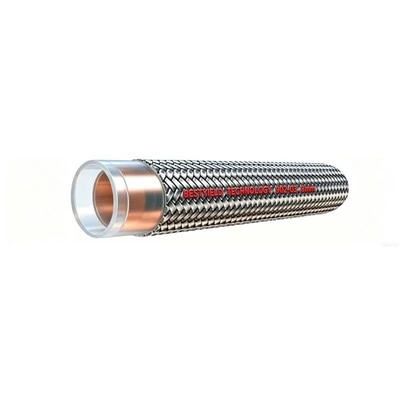
Wait, let’s address a myth I hear all the time: “Silicone is too soft, so it can’t handle pressure cycles.” That’s partially true for cheap, low-quality silicone, but not for properly formulated MVQ hoses. Good MVQ hoses have a reinforced layer—usually polyester or aramid fiber—inside the rubber that adds tensile strength, so it can handle pressure cycles without bulging or splitting. The rubber itself still has that flexible molecular structure, so when the pressure releases, it bounces back, no fatigue. The reinforced layer is key here; it’s not just solid silicone, it’s a composite that balances flexibility and strength.
Another test the lab ran last year was a pressure cycle test: they increased the pressure from 0 to 150 PSI, back to 0, 10,000 times. The MVQ hose only had a 1% increase in outer layer thickness, which is normal. The EPDM hose had a 8% increase, and started developing inner layer blisters after 6,000 cycles. That blistering is fatigue damage— the inner layers are stretching too much, getting weak, and eventually split. MVQ’s ability to rebound is why that doesn’t happen.
Now, as a supplier, I have to be honest about the limitations, because I’d rather my clients be happy than come back frustrated. First, UV exposure: if you leave an MVQ hose outside for years without any coating, it will slowly degrade, which reduces fatigue resistance. But if you add a thin EPDM outer layer for UV protection—something we do on most of our outdoor-grade MVQ hoses—it lasts just as long as any other UV-resistant hose. Second, extreme low temperatures: below -60°F, MVQ starts to get stiff, so its fatigue resistance drops. For cryogenic applications, we recommend modified silicone blends, but that’s a niche use case. Third, abrasion: if the hose is rubbing against a sharp metal edge, even MVQ will wear down faster, so we always include custom sleeves or mounting brackets for high-abrasion setups.
A lot of new hose manufacturers will cut corners on MVQ, right? They’ll use cheap, un-vulcanized silicone that doesn’t have the molecular structure to handle fatigue. That’s why it’s important to source from a supplier that does testing, not just sells “silicone hoses.” We test every batch of our MVQ hoses for flex resistance, pressure resistance, and temperature stability before they leave our warehouse, because I don’t want my name attached to a hose that fails after a month.
Let’s wrap this up with a real takeaway, not just tech specs. If you’re dealing with an application where the hose is going to flex a lot, cycle pressure nonstop, or handle big temperature swings, MVQ hose has excellent fatigue resistance—way better than EPDM, nitrile, or natural rubber, in most cases. It’s not perfect, but it’s one of the most reliable materials on the market for cyclic stress.
CR Hose If you’re ready to stop dealing with hoses that crack after months, have questions about whether MVQ is right for your specific application, or need a custom quote, hit us up to talk details. We can send over test reports, sample hoses, or walk through exactly what you need for your system. Don’t settle for hoses that fail early—let’s find a solution that lasts.
References
- ASTM D2000, Standard Classification System for Rubber Products in Automotive Applications
- Yeoh, O. H. (1993). Some forms of the strain energy function for rubber. Rubber Chemistry and Technology, 66(5), 754-771.
- Suman, S., & Srivastava, S. (2021). Fatigue behavior of silicone rubber under cyclic loading: A review. Materials Today: Proceedings, 45, 2945-2949.
- Automotive Industry Action Group (AIAG). (2022). Fluid Transfer Hose Performance Standards for Light-Duty Vehicles.
BESTYIELD Technology (Huizhou) Co., Ltd.
BESTYIELD Technology (Huizhou) Co., Ltd. is one of the most professional mvq hose manufacturers and suppliers in China, featured by quality products and good price. Please rest assured to buy durable mvq hose made in China here and get quotation from our factory. Customized orders are welcome.
Address: Yinshan Industrial Zone, Liangjing Town, Huiyang District, Huizhou City, Guangdong Province
E-mail: rick@bestyield.net
WebSite: https://www.bestyield.org/
