Hey there, if you’ve been deep in the energy storage game lately (whether you’re designing a residential solar setup, scaling a commercial lithium-ion battery bank, or even messing with flow batteries for grid storage), you know that every component counts. The stuff that looks super basic—like copper busbars—can make or break how well your system actually performs, right? I’ve been selling copper busbars for over 10 years, and I can’t tell you how many times I’ve talked to engineers who just slap in whatever they found online and wonder why their energy storage system is overheating or losing way more power than it should. Today, let’s break down exactly what you actually need from copper busbars for energy storage systems (ESS)—no stuffy industry jargon, just real, practical stuff I’ve learned from working with hundreds of ESS builders. Copper Busbar
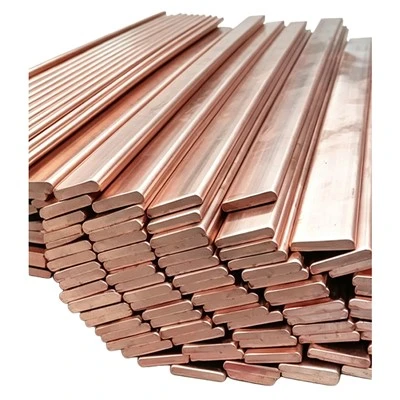
First off, let’s get one thing straight: not all copper is created equal for this. You might think “copper is copper” but trust me, when you’re dealing with ESS, where you’re pushing consistent, high current (we’re talking hundreds, sometimes thousands of amps) through tight, enclosed spaces, the grade of copper makes a massive difference. For most ESS applications, you want to go with electrolytic tough pitch (ETP) copper—think C11000 grade. Why? Because it has 99.9% pure copper, which is way more conductive than lower grades (like copper with extra iron or tin, which is sometimes used for wiring but not busbars). Wait, I’ve had a few guys ask me if they can save a buck with deoxidized copper, but no—deoxidized is for stuff where you’re welding it and don’t want porosity, but ESS busbars need maximum conductivity, so ETP is non-negotiable for 99% of setups. If you go with a lower-grade copper, you’ll see higher resistance, which means more heat buildup, and heat is the enemy of every battery—shortens its lifespan, makes it less efficient, and even poses a tiny fire risk (I don’t like talking about fire risks, but it’s real when components overheat).
Next up: current carrying capacity, or as we call it in the biz, ampacity. This is probably the number one thing I get asked about. A lot of ESS builders look at a busbar’s cross-sectional area and call it a day, but there’s way more to it than just that. Ampacity isn’t just about how much current you can cram through a bar—it’s about how much heat that generates, and how that heat can dissipate. For example, a 10mm x 50mm copper busbar might handle 300 amps if it’s mounted in open air, but if it’s packed tight between battery modules in a sealed ESS cabinet, that same bar might only handle 250 amps because there’s no airflow to cool it down. We always tell clients to derate their busbar ampacity by 10-15% if it’s going in an enclosed cabinet, and another 5% if it’s near heat-generating components like power inverters or battery management systems (BMS). I once had a customer send me a panic email because his 1MWh ESS was overheating after a week of testing—turns out he used the same busbar specs he used for a small solar panel array, didn’t derate for the enclosed cabinet, and the bars were running 80C, which was killing his battery modules. Fixing it meant upsizing the busbars and adding small ventilation slots in the cabinet, but we could’ve avoided that whole headache if he’d checked ampacity properly upfront.
Then there’s the physical fit and form factor. ESS setups aren’t one-size-fits-all, so your busbar needs to play nice with whatever battery modules you’re using—whether that’s cylindrical 18650 cells, prismatic lithium-ion packs, or even larger format pouch cells. I’ve seen busbars that are too wide, don’t have the right mounting holes, or have sharp edges that scratch the battery casing (which can cause shorts, by the way) get sent back all the time. Customization is key here. For example, residential ESS usually have smaller module packs, so their busbars might be shorter, with notches to fit between cells, while commercial grid-scale ESS have long rows of modules, so their busbars are often bent or cut to fit the exact length of the cabinet. We even make busbars with multiple parallel sections for systems that need to split current between two battery banks, and that’s not something you can get off a standard shelf—you need a supplier that can cut, bend, and drill to your exact specs. One thing I always emphasize: don’t make the busbar longer than it needs to be. Extra length means more resistance, more heat, and more wasted copper (which is just extra cost for you). We work with every client to map out their module layout before manufacturing, so their busbars are exactly the right length, no extra fluff.
Corrosion resistance is another big one, especially if the ESS is going to be installed outdoors (think commercial setups, grid-tie systems, or residential systems in humid, salty areas like coastal regions). Copper naturally oxidizes when exposed to air, but that thin layer of patina is actually pretty conductive—wait, but if there’s moisture or salt, that patina can turn into something more corrosive that eats away at the copper over time, increasing resistance. So we always apply a plating or coating to busbars for outdoor or high-humidity setups. The most common is tin plating—cheap, easy to apply, and it prevents corrosion without messing with conductivity. We also do nickel plating for systems that are going to be in super harsh environments, like offshore storage, but tin is good enough for 90% of ESS setups. Just last year, a client in Florida sent us pictures of his ESS after a hurricane—his old busbars (no plating) had turned green and were corroded, so he switched to our tin-plated ones, and they looked almost brand new a year later. That’s the kind of thing you don’t think about until it’s too late, so don’t skip the coating.
Heat dissipation ties back to ampacity, but it’s worth calling out specifically because ESS is all about efficiency. Copper is way better at conducting heat than aluminum (we’ll get to aluminum in a sec), so choosing copper over aluminum busbars is a no-brainer for ESS. Wait, I know aluminum is cheaper, but let’s be real—aluminum has 60% less conductivity than copper, so you’d need a busbar twice as big to get the same current handling, which takes up more space in the already tight ESS cabinet, and you still get more heat. Also, aluminum forms a very resistive oxide layer, so if you’re connecting it to copper terminals (which you will be, because inverters and BMS use copper), you’ll get a lot of resistance at the joint, which is a major power loss point. I’ve had a few clients try to use aluminum to save money, and every single one came back a few months later asking to switch to copper because their system’s round-trip efficiency was 5% lower than expected. For ESS, where every percent of efficiency adds up over years of charging and discharging, copper is worth the extra cost—trust me.
Another underrated requirement: electrical continuity at connections. Even the best busbar in the world is useless if the joints connecting it to batteries, inverters, and other busbars are bad. When you install busbars, you need to use the right torque on the bolts—too loose, and you get high resistance and heat; too tight, and you can strip the holes or damage the busbar. We always give clients a torque chart with every order, and we recommend using lock washers or spring washers to prevent the bolts from vibrating loose over time (which is a big issue with ESS that get charged and discharged a lot, leading to vibration in the cabinet). Also, make sure you’re using contact grease at the joints— it prevents corrosion and fills in any tiny gaps between the busbar and terminal, which reduces resistance. We have clients who skip the grease and come to us with overheating joints, so that’s a quick fix if you’re already set up, but better to include it from the start.
Wait, what about fault current handling? ESS systems are built to handle unexpected surges—like if there’s a short circuit somewhere in the battery bank, or a grid spike. Your busbar needs to be able to withstand that fault current without melting, bending, or breaking. For most residential and small commercial ESS, busbars rated for 10,000 to 20,000 amps of fault current are enough, but large grid-scale systems might need higher ratings. We test all our busbars for fault current before they ship—we don’t just go by specs on a sheet. A few years back, we had a client building a 5MWh grid storage system who tried to use untested busbars from another supplier, and during a test short circuit, the bars melted and caused a shutdown that cost them thousands in lost revenue. We now include full fault current test reports with every order, so clients have peace of mind that their busbars won’t fail when they need them most.
Let’s also talk about thermal expansion. Copper expands when it gets hot, right? So if you have a long busbar running between two battery modules, when the system charges and discharges and gets hot, the bar will expand, and if it’s fixed at both ends, it can warp or crack. That’s why we usually add a small gap or a flexible connection at one end of long busbars for ESS setups. Flexible busbars (which are made of thin copper strands laminated together) are even better for this, because they can move with the expansion and contraction without putting stress on the fixed parts. They’re also great for fitting into tight spaces where rigid bars won’t bend without breaking. A lot of ESS builders swear by flexible busbars for module-to-module connections, and we totally get why—they solve a lot of the physical fit and thermal expansion issues.
Now, let’s clear up a few myths I hear all the time. First myth: “Thicker busbars are always better.” No, not if they’re too thick to fit in your cabinet, or if you’re over-sizing and wasting money on extra copper. You need the right thickness for your ampacity and space constraints. Second myth: “Plating doesn’t matter.” As I mentioned earlier, corrosion is a real problem, especially in outdoor or humid environments. Third myth: “Aluminum is the same as copper for busbars.” Spoiler: it’s not, for all the conductivity and resistance reasons we talked about.
At the end of the day, the best copper busbars for energy storage systems are the ones that are tailored to your exact setup. You don’t need a one-size-fits-all bar off the shelf—you need a supplier that will work with you to get the right grade, right size, right plating, right connections, and right testing. I’ve been in this long enough to know that cutting corners on busbars is a terrible idea. It might save you a few bucks upfront, but it’ll cost you in lost efficiency, shorter battery life, and even repair or replacement costs down the line.
If you’re working on an energy storage project right now and need help picking out the right copper busbars—whether it’s for a small residential system or a huge grid-scale setup—hit me up. We can talk through your layout, your amp needs, your environment, and make sure you get exactly what you need to keep your ESS running smooth and efficient. No pressure, just honest advice from someone who’s been in the thick of this for years.
Connecting Rods References:
- International Electrotechnical Commission (IEC) 60364-5-52: Electrical installations of buildings – Selection and erection of electrical equipment – Wiring systems.
- Copper Development Association (CDA) Handbook: Copper for Electrical Applications, 2022.
- Battery University: “Thermal Management of Lithium-Ion Batteries,” 2021.
- Underwriters Laboratories (UL) 486A: Standard for Safety for Connectors – Electrical.
- Energy Storage Association (ESA): “Best Practices for Balance of System Components in Energy Storage Systems,” 2023.
Zhejiang Jintai Copper Industry Co., Ltd.
We are one of the most professional copper busbar manufacturers and suppliers in China, also support customized service. With abundant experience, we warmly welcome you to wholesale bulk high quality copper busbar made in China here from our factory. For quotation, contact us now.
Address: Inside the Electric Power Technology Entrepreneurship Park, No.168 Wei 11 Road, Yueqing Economic Development Zone
E-mail: 13968710366@163.com
WebSite: https://www.jintaicopper.com/
