Hey there, fellow KIA owners and performance seekers! KIA Series Brake Discs
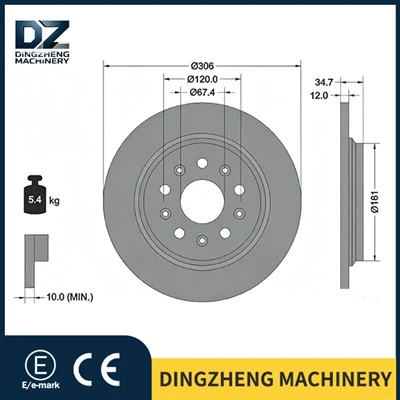
If you’ve ever found yourself staring at your KIA’s brake discs, wondering if swapping in drilled or slotted ones is worth the hype, you’re not alone. As someone who’s been in the KIA Series Brake Discs game for a minute—supplying direct-fit parts for everything from the sporty Stinger to the reliable Sportage—I get the questions that pop up in my DMs, workshop chats, and even random parking lot convos. Today, let’s break this down straight: can you actually use drilled or slotted discs for your KIA, and should you?
First, let’s cut through the confusion. Drilled discs have small holes bored right through the surface, slotted discs have long, thin groves cut across the friction face. Both are marketed as upgrades for stopping power, heat management, and even looks. But for KIA specifically, this isn’t a one-size-fits-all answer. It depends on what you drive, how you drive it, and what you actually need from your brakes.
Let’s start with the basics: KIA doesn’t stamp “no drilled/slotted” into their factory discs. A lot of people assume that because OEM KIA brakes are tuned for daily commuting, aftermarket upgrades won’t fit or work right—and that’s half true, not all of it. When we make KIA Series Brake Discs, we engineer every part to match OE bolt patterns, hub diameters, and mounting offsets. So fitment is rarely the issue. The problem is performance, and when that matters.
Take daily drivers, for example. If you’re driving a KIA Forte to work, hauling the kids in a Sorento, or running errands in a Soul, your brake use is stop-and-go, city streets, maybe a quick highway merge here and there. Factory discs are built for this: they’re solid, durable, and handle the moderate heat of daily driving without breaking a sweat. Now, drilled discs for daily use—here’s the catch. Those holes? They’re weak points. Every time you hit the brakes, the disc flexes a little, and those holes create stress concentrations. Over time, that can lead to cracks—especially if you’re slamming on the brakes in stop-and-go traffic, where heat builds up fast. Slotted discs aren’t much better for daily use. The grooves are supposed to clear brake dust and gas, but for casual driving, that dust is minimal. Instead, the grooves act like little nicks, and under repeated light braking, they can wear faster than solid discs. I’ve seen too many Forte owners come back after 10k miles saying their new drilled discs started cracking—they didn’t account for daily heat cycling.
But wait, that doesn’t mean drilled or slotted are useless for KIA. If you’ve got a performance-focused KIA—like the Stinger GT, with its turbo V6, or the K5 GT-Line that you autocross on weekends—then these upgrades make sense. Performance driving is all about hard stops from high speeds, which generates way more heat than daily use. Slotted discs excel here: the grooves scrape away brake pad material, gases, and water so your pads stay in consistent contact with the rotor, no matter how many laps you do. Drilled discs can work too—they vent heat fast, which prevents brake fade, that mushy feeling when your brakes lose stopping power after repeated hard use. For KIA’s performance models, where factory brakes are tuned for comfort, not track days, drilled or slotted can bridge that gap. We actually supply a lot of Stinger owners with slotted discs for their weekend track events, and 9 out of 10 of them say the fade is gone compared to OEM.
Another point: brake noise. A lot of people love drilled discs because they look cooler, but the groves or holes can cause brake squeal at low speeds. For daily drivers, that’s a nuisance you’ll deal with every time you pull into a parking spot. For performance drivers, that squeal is background noise when you’re focused on driving. It’s a trade-off that’s worth it for some, not others.
Now, let’s talk about myths I hear all the time. “Drilled discs stop faster, full stop.” No, that’s not true. In ideal conditions—dry, clean, no heat buildup—solid, high-quality OEM discs will stop just as fast as drilled. The only time drilled gives a real benefit is when heat is so high that the pad starts to glaze or the rotor starts to warp. If you’re just commuting, that heat never gets that bad, so you’re not gaining anything from the holes. Another myth: “All KIA Series drilled discs are the same.” Nope. Cheap aftermarket discs with too-small holes or holes placed too close to the edge are way more likely to crack. We make our KIA drilled discs with precision CNC drilling, spaced far enough apart to keep structural integrity, so they don’t fail under normal or even moderate performance use. That’s why buying from a supplier who actually knows KIA—like us—matters. We don’t just repackage generic discs; we tailor every set to KIA’s weight, power, and brake system specs.
What about towing? If you’ve got a KIA Telluride or Sorento that you use to tow a camper or a boat, hard stops while towing put extra stress on the brakes. Slotted discs are great here—they clear the excess pad dust and heat that comes with towing, so your brakes stay responsive. We’ve had Telluride owners swap to our slotted discs for towing, and they say they notice less brake fade when going down steep hills compared to OEM. That’s another case where these upgrades pay off, not just for performance drivers.
Wait, let’s circle back to fitment. I mentioned earlier that fitment is rarely the issue, but there’s a caveat: don’t just buy any drilled/slotted discs and assume they’ll fit. KIA’s disc sizes vary a lot—your Forte might have a 280mm front disc, while a Stinger has a 325mm front disc. If you get discs with the wrong diameter, they won’t mount to the hub, or the caliper won’t fit over them. That’s why working with a supplier who specializes in KIA Series Brake Discs is key. We make sure every part matches the exact OE specs for your model, so you don’t have to mess with modifications. No trimming, no custom work, just bolt-on and go.
Now, should you actually do it? If you’re a daily driver, stick with solid discs. Unless you’re dealing with recurring brake fade, or you just want the looks (and don’t mind the risk of cracking), save the drilled/slotted for when you need the heat management. If you’re a performance driver, tow regularly, or live in a hilly area where brakes work extra hard, go for slotted—they’re more durable for those jobs than drilled, in my experience. Drilled can work if you’re on a track, but only if you don’t do a ton of daily driving.
I get it, a lot of KIA owners want to upgrade their ride, and brakes are one of the most noticeable performance parts. But don’t fall for the “bigger holes = better brakes” marketing. It’s all about use case. When we supply KIA Series Brake Discs, we always ask customers how they use their car before recommending a set. That’s the service you can’t get from a random online retailer who doesn’t know KIA’s brakes.
Let me share a quick story. Last month, a guy came to us with a 2022 Forte. He’d bought a set of cheap drilled discs online, installed them, and after 5,000 miles, they had cracks all around the holes. He was ready to write off drilled discs entirely. We sold him a set of our slotted solid discs (wait, no—our solid discs with slotting only where it matters, not through the whole disc) and explained that his daily stop-and-go commute was too hard on the holes. Now, 8,000 miles later, he’s loving it, and his brake squeal is gone too. That’s the kind of mistake we want to help people avoid.
Another thing to consider: brake pad compatibility. Some pads work better with solid discs, others with slotted. For performance drivers, we pair our slotted KIA discs with high-temperature pads, which is a combo that eliminates fade. For daily drivers, organic pads work great with our solid discs, no issues. If you mix and match cheap pads with drilled discs, you’re asking for squeal, dust, and even reduced stopping power.
So, to wrap this up: Can you use drilled or slotted KIA Series brake discs? Yes, but only when it makes sense for your driving. Don’t do it just because it looks cool if you’re commuting 5 days a week. Do it if you’re pushing your KIA harder on the weekends, towing, or dealing with frequent high-heat stops. And always buy from a supplier who knows KIA—someone who’s not just selling parts, but knows how your model’s brakes work.
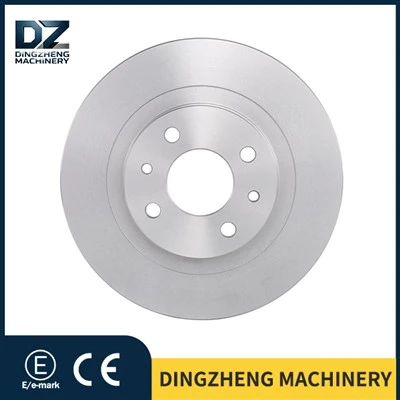
If you’re thinking about swapping your discs, whether you’re a daily driver or a weekend warrior, we can help you pick the right set for your KIA. No guesswork, no generic advice—just parts built for your model, tailored to how you use your car. Reach out, and we can walk you through fitment, performance, and what will work best for your ride.
Brake Discs for Suzuki References
- Automotive Brake Technology: Heat Management in Rotors and Pads (Society of Automotive Engineers, 2021)
- KIA OEM Brake System Specifications for 2018–2025 Model Lines (KIA Motor Service Bulletin, 2024)
- Performance Brake Upgrade Compatibility: A Guide for Modern Compact and Mid-Size Sedans and SUVs (Automotive Aftermarket Industry Association, 2022)
- Stress Concentration in Drilled Brake Rotors: Durability Analysis (Journal of Automotive Engineering, 2023)
- Daily Driving vs. Performance Brake Rotor Wear Patterns (Consumer Reports Automotive Testing, 2023)
Laizhou Dingzheng Machinery Co., Ltd.
As one of the most professional kia series brake discs manufacturers and suppliers in China, we’re featured by quality products and good price. Please rest assured to buy cheap kia series brake discs for sale here from our factory. We also accept customized orders.
Address: Luan Jia village, Tushan town, Laizhou city, Shangdong
E-mail: AMY@cndingzheng.com
WebSite: https://www.dingzhengbrake.com/
