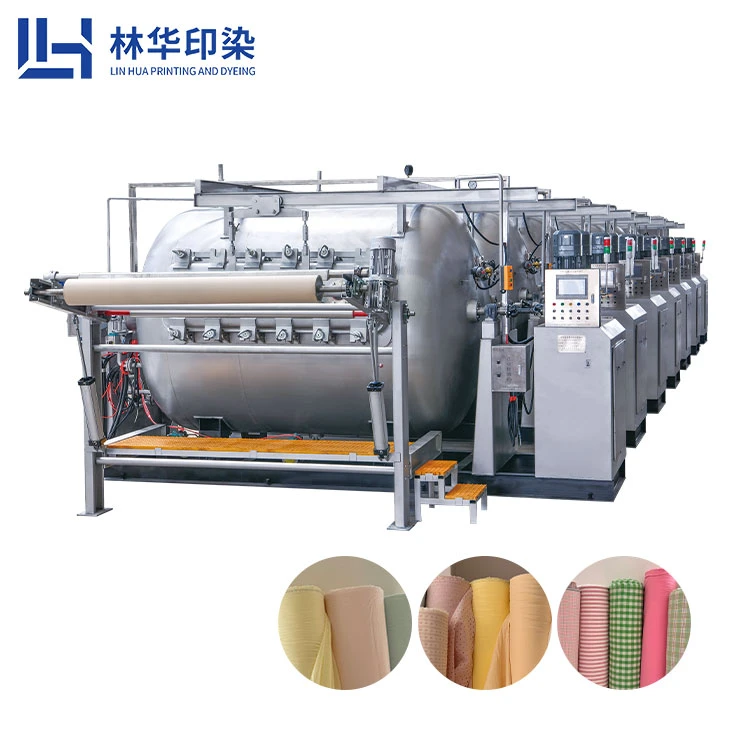
If you’ve ever worked in textile manufacturing—whether you’re a production manager, dyer, or equipment specifier—you know that dyeing is equal parts art and science. The difference between a vibrant, consistent fabric batch and one that’s spotty, faded, or uneven often comes down to the dyeing method you choose. Two of the most common industrial methods are jigger dyeing and jet dyeing, and as someone who’s spent the last 15 years supplying jigger dyeing machines to textile mills across Southeast Asia, I’ve seen firsthand how picking the right one can make or break a production run. A few years back, I had a client in Bangladesh who was dyeing high-end cotton shirting with jet machines and ending up with 8% waste due to uneven uptake; when they switched to our jigger lines, that waste dropped to less than 1% and their dye cost per yard fell by 12%. That’s the kind of tangible difference I want to break down today—because it’s not just about which method is “better,” it’s about which fits your fabric, your budget, and your end product. Jigger Dyeing Machine
Let’s start with the basics, so we’re all on the same page. Dyeing, at its core, is the process of applying color to textile fibers, yarns, or fabrics, using dyes that bond chemically or physically to the material. The goal for most manufacturers is uniformity (no light or dark spots), color fastness (so the dye doesn’t bleed when washed or exposed to light), and efficiency (minimizing water, energy, and dye waste). Jigger dyeing and jet dyeing both aim for that, but they operate on entirely different mechanical principles—principles that shape every part of the process, from the type of fabric you can use to the production volume you can hit in a shift.
First, jigger dyeing. This is a method designed for woven fabrics, specifically long, continuous rolls (called “piece goods”) of fabrics like cotton, polyester, linen, blends, and even silk. Here’s how it works: the fabric is wound onto two large, cylindrical rollers at either end of a machine, called “jiggers.” One roller holds the dry fabric at the start, and the other is empty (or “take-up”) at the beginning of the cycle. Between the two, there’s a long, narrow dye bath filled with heated dye solution, usually 30 to 60 meters in length, depending on the machine’s size. To dye, you feed the fabric from the full roller through the dye bath, and onto the empty take-up roller—so the fabric passes through the dye only once in each direction. Once the entire roll is through the bath, you can flip the rollers to pass it back through again, repeating the cycle until the fabric has absorbed the desired amount of dye.
Jet dyeing, by contrast, is designed for fabrics that might get damaged or creased under the tension of jigger dyeing. It’s a method that uses a high-pressure stream of dye solution (the “jet”) to carry the fabric through the dye bath, instead of relying on tension from rollers. The fabric is usually loaded in batches—often 50 to 500 kilograms at a time—loosely, without being wound tight around rollers. The jet nozzle pushes the dye solution at speeds of 100 to 200 meters per minute, and the fabric flows along with the solution in a closed, circular chamber, like a large, heated washing machine drum. The solution is circulated continuously, so the fabric is constantly being agitated and exposed to fresh dye, rather than being pulled tight through a narrow bath.
Now that we have the basics, let’s dive into the key differences—differences that matter for every part of your operation, from the types of fabrics you can process to your bottom line.
First, fabric compatibility. This is where the biggest gap lies. Jigger dyeing works best for woven fabrics that are strong, stable, and don’t have stretch. Think of things like denim, cotton sheeting, upholstery fabrics, and woven polyester broadcloth. The tight tension from the rollers keeps the fabric flat and uniform during the dyeing process, which is perfect for fabrics that need a smooth, even surface—like shirting that’s cut into patterns for men’s suits, or upholstery that will be stretched over furniture. But jigger dyeing can’t handle stretchy fabrics, like spandex blends, because the tension will break or distort the fibers. It also struggles with delicate fabrics, like silk chiffon, because the tight winding and friction against the rollers can cause snags or tears.
Jet dyeing, though, is made for fragile, stretchy, or loose-woven fabrics. That includes jersey knits, spandex blends, voile, and even pile fabrics like fleece. The lack of roller tension means these fabrics don’t get stretched out of shape, and the jet flow agitates them gently enough to avoid tearing delicate fibers. But here’s the catch for jet dyeing: because the fabric is moving freely with the solution, it has a tendency to crease or tangle if the jet speed is too high. That’s a big problem for woven fabrics, especially tight, smooth ones like shirting—creases in woven fabric leave permanent lines that ruin the finish, so jet dyeing isn’t ideal for those.
Next, uniformity and color consistency, the backbone of good dyeing. Jigger dyeing has a reputation for being extremely uniform, and that’s no accident. Because the fabric is passed through a narrow, static dye bath in controlled, consistent lengths, every part of the fabric is exposed to the exact same concentration of dye for the exact same amount of time. The temperature is evenly regulated across the bath, and the tension keeps the fabric flat so there’s no pooling or uneven uptake. That’s why our clients who dye high-end shirting or upholstery fabric get such consistent results with jiggers—no light spots, no uneven streaks, no color variation between the start and end of the roll. In fact, textile testing labs often use jigger dyeing for calibration because of its reliability.
Jet dyeing, on the other hand, is prone to minor uniformity issues if not tuned correctly. Because the fabric is moving through a large, dynamic bath, parts of the batch might be exposed to the dye for slightly longer than others, or the concentration of dye might shift in different parts of the chamber. If the jet speed is too fast, the fabric doesn’t absorb enough dye; if it’s too slow, it gets over-saturated. For many mass-produced fabrics, this is acceptable—like t-shirts for fast fashion, where minor color variation is barely noticeable. But for high-end goods, jet dyeing can lead to unevenness that requires re-dyeing, which adds to cost and waste.
Then there’s water, energy, and dye efficiency—something every mill manager cares about. Jigger dyeing is far more efficient here. The narrow dye bath uses 50 to 70 liters of water per kilogram of fabric, compared to 100 to 150 liters per kilogram for jet dyeing. Because you’re reusing the same bath for multiple cycles (you can run the same dye solution through 3 to 5 batches before it needs to be refreshed), you also use way less dye. A typical jigger run uses 10 to 15 grams of dye per kilogram of fabric, while jet dyeing uses 15 to 25 grams per kilogram, because the larger bath and more agitation means some dye is lost to overflow or doesn’t bond properly. When you factor in energy, jiggers use about 20% less electricity per kilogram than jet machines, because they don’t need to power a high-pressure jet pump. For a mill dyeing 100 tons of fabric a month, that’s a savings of tens of thousands of dollars a year in utilities alone.
Wait, but that doesn’t mean jigger is always cheaper—there’s the matter of batch size. Jet dyeing works best for small-to-medium batches, especially for custom or short-run orders. Because jet machines load fabric in loose, flexible batches, you can switch between fabric types or dyes quickly, without having to rewind long rolls. Jigger dyeing, though, is designed for long, continuous runs of the same fabric. A single jigger roll can be hundreds of meters long, so you need a large order to make it worth setting up the machine. If you’re a mill doing custom fabrics for small brands, jet dyeing’s quick changeover is a huge advantage—no need to waste time rewinding rolls for a 100-kilogram sample run. Jigger machines make sense only for long runs, usually 500 kilograms or more, where you can amortize the setup cost over a large volume.
I also want to talk about waste and quality, because that’s where I see the biggest pain points for clients picking the wrong method. A few years ago, I got a call from a client in Turkey that was dyeing woven cotton twill for work pants using jet machines. They were having a problem with “end-to-end” variation: the first meter of each roll was darker than the last, because as the cycle went on, the dye in the jet bath got slightly diluted and less concentrated. They were throwing away the first and last 5 meters of every roll, adding up to 10% waste. When we installed a jigger line for them, that waste dropped to less than 1% because the narrow, static bath kept dye concentration consistent across the entire cycle. For high-volume, woven fabrics, that kind of waste reduction is a game-changer.
Jet dyeing’s waste issue is different—its main problem is “side-to-side” creasing, especially for light-colored fabrics. If a batch of jersey knit gets a crease during the jet cycle, that part of the fabric doesn’t absorb dye correctly, leaving a white or light line that’s impossible to fix. For dark, opaque fabrics, this is rarely an issue, but for light pastel knits, it’s a major headache. Jigger dyeing eliminates that because the fabric is kept flat, no creases, no tangles.
Now, let’s address common myths, because I hear these all the time from clients. One myth is that jigger dyeing is outdated, that jet is the modern, high-tech method. That’s just not true. Jigger technology has advanced a lot in the last decade—modern jiggers have programmable temperature control, tension sensors that adjust in real time, and automatic dye dosing systems that make them as easy to operate as jet machines, with better consistency. Another myth is that jet is better for all synthetic fabrics, but that’s only partially correct. Some synthetic fabrics, like polyester, work well with both, but for high-tenacity polyester used in industrial fabrics (like conveyor belts), jigger dyeing is actually better because the tension keeps the fabric stable during dyeing, and the even uptake gives a more durable color.
So, how do you pick which one is right for your operation? Let’s break it down by use case:
- If you dye woven fabrics (shirting, upholstery, denim), need high color consistency, run long batches (500kg+), and want to minimize dye and water waste: jigger dyeing is the clear choice.
- If you dye knits, stretch fabrics (spandex blends), delicate fabrics (chiffon, silk), run small-to-medium batches, or need quick changeovers for custom orders: jet dyeing is better.
- If you do a mix? Many mills use both, which is why our jigger lines are designed to integrate seamlessly with existing jet dyeing setups, so you can switch methods depending on the job.
At the end of the day, the goal of dyeing is to make a product that meets your customer’s expectations—whether that’s a $10 t-shirt or a $200 high-end suit fabric. As a jigger dyeing machine supplier, I don’t tell every client to buy my equipment. I tell them to look at their fabric types, their average batch sizes, their waste targets, and their end product. A few years back, I had a client in Vietnam that was using jet machines for all their workwear fabric, and their waste was so high they were on the verge of closing. We helped them set up one jigger line specifically for their woven cotton work pants, and within six months, their profits were up 15% because of lower waste and dye costs. That’s the difference the right method makes.

If you’re currently looking to upgrade your dyeing setup, or you’re dealing with inconsistent color, high waste, or rising dye costs, I’d be happy to walk through your specific needs and show how our jigger dyeing lines can fit your operation. No pressure, just real, practical advice from someone who’s been in this industry long enough to know what works—and what doesn’t.
Jigger Dyeing Machine References
Textile Dyeing: Principles and Practice, edited by Paul Hauser, 2019
Industrial Dyeing Technology: Equipment and Processes, by J. Shen, 2021
Textile Waste Reduction and Sustainability, by M. Roy, 2020
Wuxi Linhua Printing and Dyeing Machinery Factory
As one of the most professional jigger dyeing machine manufacturers and suppliers in China, we’re featured by quality products and good service. We warmly welcome you to buy discount jigger dyeing machine made in China here from our factory. If you have any enquiry about quotation, please feel free to email us. Customized orders are welcome.
Address: North Beihui Road, North District, Qianzhou Supporting Area, Huishan Economic Development Zone, Wuxi City, Jiangsu Province
E-mail: 15190217119@163.com
WebSite: https://www.lhdyeingmachines.com/
