What is the lifespan of a metal beverage crate?
When I first started my beverage crate supply business, I’ll admit I didn’t give much thought to how long those sturdy metal boxes would actually last. Most of my early conversations with retailers focused on price, load capacity, and how quickly we could get crates delivered for that summer’s beverage rush. But over the past eight years of working with bars, grocery chains, and regional bottlers across the country, one question has come up more often than any other: “How long will these metal crates actually hold up?” Beverage Crates
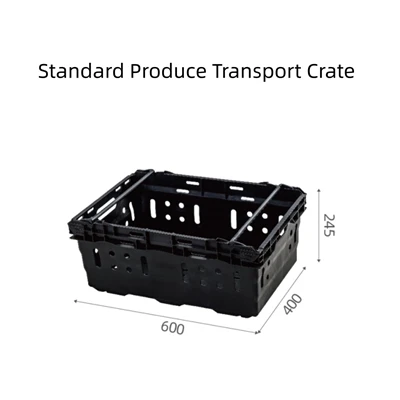
It’s a question that makes sense, really. For a business that’s moving thousands of cases of soda, beer, water, and juice every week, replacing crates is a hidden cost that adds up fast. Plastic crates used to be the go-to for many operations, but more and more of my clients are switching to metal because of their durability. Yet I still get phone calls from managers who’ve worked with metal crates that only lasted two or three years, or – on the flip side – from someone who’s had the same set of crates in use for 15 years and counting. So what’s the real lifespan of a metal beverage crate, and why is there such a big difference between one operation and the next?
Let me start with the basics. A quality metal beverage crate isn’t just a box made from steel or aluminum – it’s a piece of equipment built for repeated use, constant stacking, and exposure to everything from cold storage temperatures to the spillage of sticky soda. From what I’ve learned working with our manufacturers and talking to fleet managers, the baseline lifespan for a well-made metal beverage crate is somewhere between 10 and 20 years. But that’s a broad range, and I’ve seen it go either way based on three main factors: how the crates are made, how they’re handled, and how well they’re maintained.
First, let’s talk about the construction itself. Not all metal crates are created equal. When we source our crates, we specify heavy-gauge steel that’s been galvanized to resist rust. A lot of cheaper crates on the market use thinner steel that bends easily, or skip the galvanization and rely on a paint coat that chips off within months. I remember one client who bought crates from a no-name supplier five years ago – they thought they were saving money, but by year three, half of them had dented sides that made stacking impossible, and rust spots had started forming around the edges. By comparison, our standard galvanized steel crates have never had a client report premature failure like that. The welds matter too. Poorly placed or weak welds will break under the weight of a full case of beer, especially when crates are being tossed around in delivery trucks or stacked too high. We use robotic welding for our crates, which is more consistent than manual welding and creates stronger, more uniform joints that don’t fail over time.
Material choice also plays a role. Aluminum crates are lighter, which is a plus for delivery teams who have to lift and carry them, but they’re not as impact-resistant as steel. I’ve found aluminum crates work well for smaller operations that don’t have a lot of heavy lifting, but for a major bottler moving pallets of crates across the country, steel is the better long-term investment. Even with the extra weight, the longer lifespan means you’ll replace them less often. We had a client last year who switched from aluminum to steel crates after dealing with bent aluminum crates that couldn’t be stacked – they told me their steel crates are now in their fourth year and still look like new, whereas the aluminum ones only lasted two and a half years. That’s the kind of calculation I walk clients through: upfront cost vs. long-term savings on replacements and downtime.
Now, even the best-made crate won’t last 20 years if it’s being abused. That’s where handling practices come in, and this is something I see a huge range of across my clients. Some of the most professional operations I work with have strict rules for their crates: no dropping, no stacking more than four crates high (we always recommend three, by the way), and they use pallet jacks that are properly fitted for crate dimensions. These are the clients who call me up 12 years later to order a few replacement crates, because their original set is still going strong. On the other end are clients where crates are being tossed onto delivery trucks, driven over in loading docks, or stacked so high that the bottom ones get crushed under the weight. I worked with a craft brewery last year that had their crates stored outside during a brutal winter – snow and ice built up on the crates, and when workers would lift them, the metal bent from the extra weight. By the end of that winter, they had to replace 30% of their crates, cutting their expected lifespan in half.
Frequency of use is another part of handling. A crate that’s used every day, moving full cases to and from retail locations, will wear differently than a crate that’s only used a few times a week for special events. That craft brewery I mentioned earlier uses their crates 6 days a week, 12 months a year – the constant loading, unloading, and stacking takes its toll. Our crates for them are still holding up, but they’ll probably need replacements sooner than a crate that’s used part-time. For high-volume operations, we even offer reinforced corners on our crates – those small extra pieces of metal might seem unnecessary, but they prevent the corners from getting banged up when crates are being moved in busy warehouses. It’s a small upgrade that adds months, if not years, to a crate’s life.
Then there’s maintenance, which is probably the biggest factor most businesses overlook. Metal beverage crates don’t need a lot of care, but a little goes a long way. I can’t tell you how many times I’ve told a client, “If you just power wash your crates once a month and touch up any chips in the paint, you’ll add five years to their lifespan.” Let’s be real – crates get dirty. Soda spills, beer residue, dust from warehouses, even road salt from delivery trucks – all of this can eat away at metal over time, leading to rust. I had a grocery chain client in a snowy area who wasn’t washing their crates regularly, and after four years, they had rust spots all over the bottom of the crates. Once we started a monthly washing schedule and they fixed a few areas where the paint had chipped during loading, those same crates are now in their eighth year with no new rust. Another part of maintenance is repairing small damage before it becomes big damage. A bent side that’s left unaddressed will make stacking difficult, which leads to more bending and eventually a crate that can’t be used at all. We offer crate repair services for our clients, and most tell us that fixing a $20 bent crate is way cheaper than buying a $50 new one.
I also want to address a common myth I hear all the time: “Plastic crates last as long as metal ones, right?” No, they don’t. I’ve tested both for years, and even the heaviest-duty plastic crate will degrade in sunlight, get brittle over time, and crack when dropped from a height. We had a client who switched back to metal crates last year after using plastic for five years – they told me that in five years, they went through three sets of plastic crates, each costing about 70% of what a metal crate costs. The metal crates they bought from us five years ago? Only a handful needed minor repairs, and they’re still going strong. When you do the math, the lifespan of metal crates is consistently longer, and the total cost over time is lower.
Of course, there are exceptions. I’ve heard stories of metal crates being damaged in accidents – a forklift running over a stack, a fire in a warehouse – that end their life prematurely. But those are outlier cases, not the norm. For the average business, following best practices for construction, handling, and maintenance will get you that 10 to 20 year lifespan we talk about.
So what does this mean for you, if you’re a beverage business looking to invest in crates? First, don’t just go for the cheapest option. A $10 metal crate from an unknown supplier might seem like a good deal, but if it’s made with thin steel and bad welds, you’ll be replacing it in two years, which is actually more expensive per year than our $50 crate that lasts 15 years. Second, ask your team to treat crates with care. Train delivery staff not to drop them, warehouse managers not to stack them too high, and cleaning crews to keep them free of debris and corrosive materials. Finally, don’t ignore small damage – fix bent corners, touch up paint chips, and wash them regularly. It’s the simplest way to extend their life.
Over the years, I’ve had clients come to me panicking because their crates are rusting or falling apart. More often than not, it’s because they skipped on quality, didn’t train their staff, or didn’t do basic maintenance. I always tell them that a metal beverage crate is an investment, not an expense. When you choose a well-built metal crate, handle it properly, and take care of it, it will pay for itself over and over again through the years, replacing the need for constant purchases of new crates.
At the end of the day, the lifespan of a metal beverage crate isn’t set in stone. It’s a combination of the material it’s made from, the way you use it, and the care you give it. For my part, I’m committed to supplying crates that are built to last, and helping my clients understand how to maximize their lifespan. Because I’ve seen how the wrong crates can eat into a small business’s profits, and how the right crates can be a reliable workhorse for years.

If you’re tired of replacing crates every few years, or you want to calculate the real cost of your current crate fleet, reach out to our team to discuss your specific needs. We can walk you through our crate options, explain the differences in construction, and help you figure out a solution that will serve your business for decades to come.
Food Crates References
- American Beverage Association. (2021). Sustainable Packaging Guidelines for Beverage Distribution.
- Steel Market Development Institute. (2019). Durability of Steel Industrial Containers and Crates.
- Occupational Safety and Health Administration (OSHA). (2020). Material Handling Best Practices for Warehouse Operations.
- International Code Council. (2018). Storage and Handling Guidelines for Industrial Packaging.
- Journal of Sustainable Manufacturing. (2022). Lifecycle Analysis of Reusable Beverage Crates: Metal vs. Plastic.
Ningbo Simple Trading Co., Ltd.
Ningbo Simple Trading Co., Ltd. is one of the most professional beverage crates manufacturers and suppliers in China. With a professional production team, we are able to meet the needs of the majority of our customers. Please feel free to wholesale custom made beverage crates from our factory.
Address: Room 908, Star International Office Building, No.1359, Tiantong South Road, Yinzhou District, Ningbo City, Zhejiang Province.
E-mail: Simpleexport@nbsimpletrading.com
WebSite: https://www.logisticsequipments.com/
