If you’re reading this, chances are you’ve been there: you installed your new LED fixtures paired with a TRIAC driver, and… half the dimming range is gone. One minute the lights are blasting at 100%, the next they cut out completely before you even get to the low, cozy glow you were promised. I get it—from where I sit, as someone who’s spent the last 12 years supplying LED TRIAC drivers to electricians, lighting designers, and even DIY folks, this is way more common than it should be. A lot of people blame the driver, or the LEDs, or the dimmer switch itself. But 9 times out of 10, it’s not a part failing—it’s just a handful of small, easy-to-miss details that are cramping your full dimming range. Today, I’m gonna break down exactly how to fix this, no fancy lab degree required. LED TRIAC Driver

First, let’s keep this simple: what even is a TRIAC dimmer, and why does it matter for LEDs? Old incandescents worked by just turning power on and off, right? They ran on full power the whole time, so dimming was just reducing the average voltage going to the bulb. TRIAC dimmers (that’s the ones you’ll find in 90% of residential and commercial spaces) do something a little trickier: they chop off the front part of the AC wave, letting only the back half reach your lights. The size of that “chopped” part is what determines brightness—less chopping = brighter lights, more chopping = dimmer. Here’s where LEDs mess with the party: traditional TRIAC dimmers were built for incandescents, which have super simple, resistive loads. LEDs are way more finicky, especially with their TRIAC drivers. If your driver doesn’t play nice with the dimmer’s minimum load, or if you skip a basic installation step, you’ll never hit that smooth, 0-100% dimming.
Let’s start with the mistake I see most often: wrong total load size. This is such a basic thing, but so many people look at their LED bulbs’ wattage and think, “That’s it, I’m good.” No. Every TRIAC dimmer has a minimum load requirement, usually listed on the dimmer’s box. For example, a common residential dimmer might say it works for 10-150W incandescents—but if you’re using 10W LED bulbs, you don’t just need one bulb. LEDs run at like 1/10th the wattage of incandescents for the same brightness, so that minimum 10W incandescent load translates to 1W for LEDs. Wait, no—actually, let’s get that right: if your dimmer needs a minimum of 10W of resistive load, a 10W LED might not be enough, because LED drivers draw current differently than incandescents. A lot of people skip adding a load resistor or even a few extra bulbs to hit that minimum. If your total load is below the dimmer’s minimum, the TRIAC won’t stay on reliably at low light levels—so your lights cut out way before you want them to. I once had an electrician reach out to me panicking because his café’s LED display lights went from 20% brightness to off instantly. He was using 8 5W LED fixtures on a dimmer that needed 30W minimum—add two more identical fixtures, and suddenly he had full, smooth dimming from 10% to 100%. That’s the easiest fix, no fancy parts needed.
Next up: matching your TRIAC driver to your dimmer type. Not all TRIAC dimmers are created equal, and not all TRIAC drivers work with all dimmers. There are two main types of TRIAC dimmers: leading-edge and trailing-edge. Old dimmers (the ones that look like the classic toggle or slide dimmer in your grandma’s house) are usually leading-edge. Most modern LEDs and TRIAC drivers are built for trailing-edge dimmers—but wait, no, not always. I’ve seen so many installers mix these up. If you put a leading-edge dimmer with a driver made for trailing-edge, you’ll get strobing, or the lights will drop off mid-dim. And it goes both way: a trailing-edge dimmer paired with an old incandescent-only driver won’t work well either, leading to that missing middle dimming range. This is where I always tell folks: check two numbers. First, the dimmer’s specs: does it list compatibility with LED TRIAC drivers? Second, your driver’s specs: what type of dimmer does it work with? If it’s a brand like mine, every driver we supply clearly says which dimmer types it’s optimized for, no guesswork. I even had a contractor who used to buy cheap generic drivers figure this out the hard way—switching to my drivers (which are optimized for both leading and trailing edge) fixed his dimming issues 100% without him having to replace his existing dimmers. That’s a big win.
Another underrated culprit: the “hold current” of your driver. Hold current is basically the minimum amount of current a TRIAC needs to keep conducting power, instead of turning off mid-cycle. When you dim a light, you’re reducing the power, so the current drops. If your driver’s hold current is higher than the dimmer can supply at low loads, the TRIAC shuts off early—leaving you with no low-end dimming. This is where a lot of cheap drivers cut corners: they skimp on components to lower cost, so their hold current is way too high for small LED loads. A high-quality TRIAC driver, on the other hand, is built with a low hold current, which lets it work with smaller loads and extend that dimming range all the way down. I remember a homeowner who wanted to put under-cabinet LEDs in his kitchen—he had super small 2W fixtures, and every driver he tried had the lights cutting out at 15% brightness. He switched to our ultra-low hold current drivers, and now he can dim those lights all the way to 2%, which is perfect for late-night snack runs without blinding him. That’s the difference between a good driver and a bad one, right there.
Wait, let’s talk about wiring. I know, wiring sounds boring, but it’s a huge one. A lot of people skip the neutral wire? No, wait—for TRIAC drivers, neutral is non-negotiable, but also, what about the length of the wire runs, or loose connections? If your wires are too long, or if you have a loose neutral or ground connection, that can create voltage drops that mess with the dimmer’s ability to regulate power. I’ve seen installations where someone ran 50 feet of 18-gauge wire for their LED fixtures—too thin, too long, and the voltage drop was enough to make the driver misinterpret the dimmer’s signal, leading to a choppy, limited dimming range. Another thing: don’t daisy-chain too many fixtures on one circuit. Each driver draws a little current, and if you overload the circuit, especially with long wires, the dimming suffers. Rule of thumb: keep wire runs under 50 feet, use 14-gauge wire for runs over 20 feet, and make sure all connections are tight (no wire nuts half-twisted, no stripped copper exposed). It sounds simple, but it’s amazing how many people skip that step.
Now, let’s cover two more common myths that I hear all the time. First: “All LEDs have the same dimming performance.” Nope. Cheap, generic LED bulbs or drivers are designed for basic on/off, not smooth dimming. They might work at 100% brightness, but their internal circuitry can’t handle the low-power chopping from a TRIAC dimmer, so you get that cut-out. Quality LED TRIAC drivers (like the ones I supply) are tested specifically for dimming compatibility, so they have the right components to adjust smoothly across the full range. Second myth: “You need a special dimmer for LEDs.” Not exactly—you just need a dimmer that’s rated for LED loads, and a driver that’s compatible with that dimmer. If you already have standard dimmer switches in your house, you don’t have to rip them all out—just make sure your driver works with them. I’ve had customers who kept their old leading-edge dimmers and used our drivers, and it worked perfectly, no new switches needed.
So, let’s recap the quick fixes you can do right now, no new parts unless you need them: 1. Check your total load: add up your LED fixtures’ wattage, make sure it meets or exceeds the dimmer’s minimum load requirement. If it’s too low, add one or two more fixtures, or add a dummy load resistor (easy to pick up at any hardware store) to hit that minimum. 2. Match your dimmer and driver: confirm your dimmer is rated for LED TRIAC drivers, and your driver is compatible with your dimmer type (leading or trailing edge). 3. Check your driver’s hold current: if you’re using small fixtures, make sure your driver has a low hold current to avoid early cut-off. 4. Double-check your wiring: use thick enough wire, keep runs short, and make all connections tight to avoid voltage drops.
Wait, but what if you’ve tried all that and it still isn’t working? That’s where it might be time to upgrade your driver. A lot of people waste money on cheap drivers that only work for basic use, but if you need full dimming, a quality TRIAC driver is the way to go. From where I stand, as someone who’s been in this game for years, the right driver isn’t just about brightness—it’s about reliability, and that full, smooth dimming you’re looking for. No more mid-dim cut-outs, no more only being able to dim from 50% to 100%.
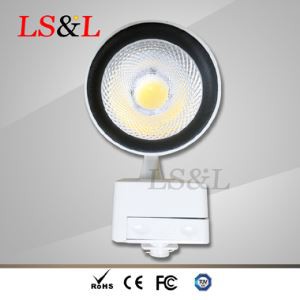
If you’re still troubleshooting, or if you’re planning a new project and want to make sure you get that full dimming range, feel free to reach out. We’ve worked with everyone from residential homeowners to large commercial lighting contractors, and we can help you pick the right driver for your setup, no confusing jargon, no upselling on stuff you don’t need. Just get in touch to chat through your needs, and we’ll make sure you get a solution that works for your space.
LED Modular Flood Lights References
- NEMA Standard 250-2021, LED Drivers for Dimmable LED Lamps, National Electrical Manufacturers Association
- TRIAC Dimmer Basics for LED Lighting, Lighting Research Center, Rensselaer Polytechnic Institute
- Load Requirements for TRIAC Dimmers, Electrical Construction and Maintenance (EC&M) Magazine
Luxsky Lighting Co., Limited
Luxsky Lighting Co., Limited is one of the most professional led triac driver manufacturers and suppliers in China, also supports customized service with low price. Welcome to wholesale the high quality and energy saving led triac driver made in China here from our factory. Contact us for quotation.
Address: 1-6#, Tongfukang High-Tech Industrial Park, Ai’qun Road, Shiyan Town, Bao’an District, Shenzhen City, Guangdong, China
E-mail: sales@luxsky-light.com
WebSite: https://www.luxsky-light.com/
