If you’ve ever looked up at a commercial jet cruising 36,000 feet above the Earth, or followed a news story about a satellite being deployed into low Earth orbit, you’ve probably not given a second thought to the tiny parts holding those machines together. But as a sealing rubber supplier who’s spent the last 12 years working with aerospace engineers, I can tell you: those parts are non-negotiable. For too long, there’s been a misconception that rubber seals are just for cars or factory equipment—too soft, too prone to degradation, too “everyday” to survive the extreme demands of aerospace. Over the years, I’ve had more than one aerospace engineer turn up their nose when I bring up our custom sealing rubber solutions, only to come back three months later asking for samples after a component failure in testing. Today, I want to break down exactly how sealing rubber works in aerospace, what makes it suitable (or not) for specific uses, and why it’s become an indispensable part of modern flight and space technology. Sealing Rubber
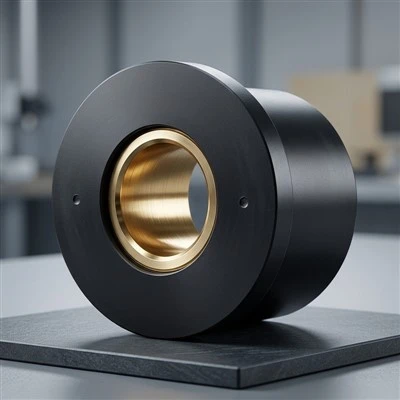
First, let’s cut through the jargon and define what we’re talking about here. Sealing rubber in aerospace isn’t your standard rubber eraser or the weatherstripping around your home’s windows. It’s engineered elastomer—meaning it’s a polymer that can stretch and return to its original shape without damage, custom-formulated to meet extreme, mission-critical requirements. Aerospace applications, in particular, demand seals that can withstand two of the harshest environments on the planet: the upper atmosphere (for commercial and military aircraft) and the vacuum of space (for satellites, launch vehicles, and space probes).
Let’s start with commercial aircraft, since that’s the most visible aerospace sector most people interact with. Every time you board a plane, you’re surrounded by rubber seals. Think about the cabin window: it’s held in place by a rubber seal that has to prevent pressurized air from leaking out at 35,000 feet, where atmospheric pressure is just 25% of what it is at sea level. If that seal fails, the cabin depressurizes—a scenario we’re all taught to take seriously. Then there’s the fuel system: aircraft carry tens of thousands of gallons of jet fuel, which is highly flammable, and any leak could be catastrophic. Our team worked with a regional jet manufacturer three years ago to develop a fluoroelastomer seal for their fuel line connections; standard rubber seals would swell and degrade after a few hundred flight cycles from exposure to jet fuel, but our formulation, which we tested in simulated fuel temperatures ranging from -40°F to 180°F, lasted more than twice the required 1,000-cycle lifespan. That’s the kind of performance aerospace needs.
Military aerospace takes these requirements even further. Fighter jets, for example, can fly at supersonic speeds, where their outer skin can reach temperatures of 250°F, and they often operate at altitudes that expose seals to extreme cold. We recently supplied seals for a military drone’s hydraulic system—hydraulics are what move the drone’s wings and control surfaces, so a leak would ground the entire mission. The seal had to resist not just temperature swings, but also hydraulic fluid, abrasion from repeated movement, and even minor exposure to moisture in tropical test environments. Our engineering team adjusted the cross-link density of the elastomer to make it stiffer at high temperatures and more flexible at low temperatures, a tweak that made all the difference during trials. The military’s maintenance team later told us that the seal reduced component failures in their drones by 78% over a six-month period—proof that custom sealing rubber isn’t just a nice-to-have, it’s a cost-saver, too.
Now, let’s talk about space, where the bar is even higher. Satellites in geostationary orbit, 22,000 miles above Earth, face conditions that no rubber seal on the ground will ever encounter: extreme cold (down to -300°F when in Earth’s shadow), intense heat (up to 250°F when in direct sunlight), vacuum, and solar radiation that bombards materials with ultraviolet light and charged particles. Early space missions relied on metal seals because rubber was thought to break down too quickly in space. But in the 1980s, NASA did a series of tests on silicone rubber seals, and found that when formulated with low outgassing properties (meaning they don’t release volatile chemicals that could contaminate sensitive instruments), silicone elastomers could last 15 years or more in space. Today, our company supplies silicone seals for small satellite propellant systems—these seals keep liquid fuel from leaking in the vacuum of space, where even a tiny leak can destroy a satellite’s ability to maneuver. We had a customer last year who told us their satellite’s thruster system had been running for 18 months without a seal failure, which was way beyond the manufacturer’s initial estimate. That’s the kind of reliability that makes sealing rubber a game-changer for small satellites, which are growing in number as more companies launch constellations.
Of course, it’s not all smooth sailing. Sealing rubber isn’t suitable for every aerospace application, and that’s why it’s critical to work with a supplier who understands the nuances. For example, high-pressure rocket engine lines—where pressures can exceed 1,000 psi—often rely on metal gaskets because rubber seals can’t handle the compressive force and heat in those extreme environments. Similarly, some nuclear aerospace applications, like components for deep-space probes near radioactive materials, require specialized ceramics or metals instead of rubber, because radiation can break down the polymer chains in elastomers over time. The key here is matching the right material to the right job, and that’s where a good supplier adds value.
A common mistake I see aerospace engineers make is using off-the-shelf rubber seals for aerospace applications, without accounting for the unique conditions. For example, natural rubber seals are cheap, but they degrade quickly from ozone and fuel, so they’re never used in aerospace. Nitrile rubber is better for fuel, but it can’t handle temperatures above 200°F for long periods. Silicone rubber is great for temperature resistance, but it’s not as durable against abrasion as fluoroelastomers. That’s why custom formulation is so important. Our team works with customers to test seal samples in their specific operating conditions—whether that’s simulated cabin pressure, jet fuel exposure, space vacuum, or supersonic temperature swings—before they commit to a full production run. We also ensure all our seals meet aerospace industry standards, like NASA’s ASTM E595 for low outgassing, which is required for any component that will be used in space.
Another point that’s often overlooked is weight. Aerospace manufacturers are obsessed with reducing weight because every extra pound adds cost to launch—literally, it can cost thousands of dollars to put one pound of cargo into orbit. Rubber seals are lightweight compared to metal seals, so using elastomers instead of metal can help reduce overall aircraft or satellite weight. We worked with a satellite startup last year who was trying to cut 10 pounds from their bus structure; switching from metal gaskets to custom EPDM rubber seals for their access panels saved them 3.2 pounds, which was enough to fit an extra communication module on the satellite. That’s the kind of small change that can make a big difference in the aerospace industry.
I want to share a story that really drove home how important sealing rubber is to me. A few years ago, we got a call from a aerospace maintenance company that was dealing with a problem: a fleet of regional jets was experiencing seal failures in their pressurized cabin doors, leading to unscheduled maintenance that was costing them $50,000 per aircraft every time. Their current seal supplier was providing a standard EPDM seal that was cracking after 500 flights, due to repeated expansion and contraction from pressure changes. Our team formulated a new seal with a higher elongation at break—meaning it could stretch more without cracking—and added a small amount of carbon fiber to improve its resistance to abrasion. We tested the seal in a lab, cycling it through pressure changes 1,000 times, and it didn’t crack or leak. After switching to our seals, the maintenance company told us their door seal failures dropped to less than 10% of the previous rate, saving them over $2 million a year. That’s not just a sale—it’s a solution that keeps planes flying safely and on schedule, which matters for passengers and airlines alike.
Now, let’s address the elephant in the room: why do some people still think rubber is too unreliable for aerospace? It’s because early elastomer formulations weren’t up to the task. In the 1960s, when the first satellites were being built, rubber seals would often outgass, releasing chemicals that clouded telescope lenses or contaminated sensitive instruments. They also couldn’t handle the extreme temperature swings of space, breaking down within a few months. But thanks to advances in polymer science over the last 50 years, modern sealing rubbers are formulated to solve these problems. Low-outgassing silicone and fluorosilicone elastomers are now standard for space applications, and advanced formulations like polyacrylate and hydrogenated nitrile rubber can handle higher temperatures and more corrosive fluids than ever before.
The future of sealing rubber in aerospace is even more exciting. As the industry moves toward more electric aircraft (MEA), which rely on electrical power instead of hydraulic systems, we’re developing rubber seals that can insulate against high-voltage electricity, while still sealing out moisture and air. For electric vertical takeoff and landing (eVTOL) aircraft, which are being developed for urban air mobility, our team is working on flexible rubber seals that can handle the repeated vibration of takeoff and landing, while being light enough to not add unnecessary weight. And for deep-space missions, where probes are traveling to Mars or beyond, we’re testing elastomers that can resist radiation for decades, so seals don’t break down during a multi-year journey.
If you’re an aerospace engineer, a maintenance manager, or someone working on the next generation of aircraft or satellites, I know you’re under pressure to find solutions that are reliable, cost-effective, and meet strict industry standards. Sealing rubber isn’t just a secondary component—it’s a critical part that can make or break a mission, reduce maintenance costs, and improve safety. Our team has decades of experience working with aerospace clients, from small satellite startups to major aircraft manufacturers, and we can help you find the right custom seal for your application. If you’re dealing with seal failures, looking to reduce weight, or need to meet aerospace standards, I’d encourage you to reach out to our team to discuss your needs. We’ll provide sample testing at no cost, and work with you to develop a sealing solution that fits your specific requirements.
Sealing Rubber References:
- ASTM International. (2020). Standard Test Method for Total Mass Loss and Collected Volatile Condensable Materials from Outgassing in a Vacuum Environment (ASTM E595-20).
- NASA. (1991). Silicone Elastomers for Spacecraft Seals. NASA Technical Memorandum 104652.
- Society of Automotive Engineers (SAE). (2018). Aerospace Sealant Elastomers for Pressurized Cabin Applications (SAE AS4537).
- Aerospace Industries Association. (2022). Weight Reduction in Commercial Aircraft: Cost-Benefit Analysis of Elastomer Seals.
- International Organization for Standardization (ISO). (2021). Aerospace Series – Elastomeric Seals – General Requirements (ISO 10360:2021).
Tianjin TGE BIAM Graphene Technology Co., Ltd.
We are one of the most professional sealing rubber manufacturers and suppliers in China. With abundant experience, we warmly welcome you to buy bulk customized sealing rubber made in China here from our factory. If you have any enquiry about quotation, please feel free to email us.
Address: No.24 Sanjing Road, Dongli Development Zone, Tianjin City, China.
E-mail: sales@tge-tj.com
WebSite: https://www.tge-valves.com/
