Hey there, if you’ve ever shopped around for vertical injection moulding machines, you’ve probably seen slide table models pop up—and no surprise there, they’re a game changer for lots of manufacturing jobs. As a supplier who’s been deep in this space for years, I get way too many questions about their production efficiency. Folks don’t just want “they’re fast”—they want the real numbers, what actually moves the needle, and how that efficiency turns into more profit for their shop. Today I’m breaking down exactly how efficient these machines are, what factors mess with that number, and why they might be the upgrade your production line’s been missing. Slide Table Vertical Injection Moulding Machine

First, let’s make sure we’re on the same page about what a slide table vertical injection moulding machine is, because not everyone calls them the same thing. Unlike horizontal injection moulders, which load parts on the side of the clamping unit, slide table models have a big, flat table that slides back and forth between two stations: one where you inject molten plastic into the mould, and another where you take the finished part out and prep the next shot. No waiting around for parts to cool, no extra labor moving moulds—this is why their efficiency stands out so much.
So, what’s the baseline for efficiency here? Let’s start with cycle time, because that’s the biggest driver. Cycle time is how long it takes to go from injecting plastic to dropping a finished part, right? For small, simple parts—like plastic bottle caps, phone charger housings, or even toy parts—slide table vertical machines knock those out in 8 to 15 seconds. Compare that to horizontal machines, which usually take 12 to 20 seconds for the same part, because they’re not doing two jobs at once. The dual station is the magic here: while one side is being injected, the other is cooling, so you’re overlapping two processes instead of doing them one after another. That overlap cuts cycle time by 20 to 30% for most low-complexity parts, straight up.
Now, that’s just cycle time. Efficiency also factors in uptime, and slide table models shine here too. I’ve had customers switch from old horizontal machines and report 5 to 10% less downtime. Why? The vertical design means gravity helps with part ejection—parts drop straight down, no fancy ejector pins that jam on horizontal machines, especially for small, delicate parts. The slide table itself is a sturdy linear rail system, not a flimsy belt drive that wears out fast. A lot of our clients run these machines 20 hours a day, five days a week, and only have to shut them down for routine maintenance every 2 weeks, which is way less than the 1-week maintenance schedule some horizontal models need.
Wait, but efficiency isn’t one-size-fits-all. It depends on what you’re making, honestly. Let’s break down different part types to make this real. If you’re doing high-volume, simple parts—think disposable cutlery, pen barrels, or packaging clips—slide table vertical machines hit production rates of 3,000 to 5,000 parts per hour. I’ve got a client that makes 5,000 small plastic hair clips an hour on a 50-ton slide table model, and when they used a horizontal machine, they only got 3,500. That’s a 43% jump just from switching machine type. The key here is that the dual station lets them unload and reload moulds without stopping the injection cycle—they never have to pause the press to grab a part, which kills a lot of small, frequent downtime that adds up fast.
For more complex parts? Like electronic components, medical device housings, or parts with inserts (think metal pins that get molded into plastic for circuit boards), slide table machines still hold their own, though the cycle time creeps up a bit. For medium-complexity parts, you’re looking at 1,200 to 2,500 parts per hour. Why? Insert molding adds a step—you have to load the metal pin onto the open table side before it slides to the injection side. But even with that extra step, it’s still way faster than a horizontal machine doing insert molding, because again, you’re overlapping the insert loading with the cooling time on the other side. I had a medical parts customer who was using horizontal machines and spending 2 minutes per part on insert handling; switching to our slide table model cut that per-part time to 45 seconds, just because they could load inserts while the next batch was cooling.
What about when efficiency drops? Let’s be real, no machine is perfect. The main thing that kills slide table efficiency is mould design. If your mould is bulky or has extra cavities, the slide table has to move farther between stations, which adds a split second to each cycle. For a 16-cavity mould vs. a 4-cavity mould, the cycle time might go up 1 to 2 seconds, which doesn’t sound like a lot, but over 10,000 parts, that’s 20 minutes of lost time. Also, if you’re using very high-temperature plastics—like PEEK for medical implants or high-heat engineering plastics—the cooling time goes up, and even though the dual station still helps, you might not see that 30% cycle time gain for those parts. We usually tell customers: if your average cycle time is over 30 seconds for most parts, a slide table machine might not be the most efficient pick, because the gain from dual stations gets offset by longer cooling times.
Another big factor: operator workflow. A lot of newer customers don’t realize that slide table machines are easier to run, which boosts overall efficiency too. The vertical clamping unit is at waist height, so operators don’t have to bend or reach way down to unload parts—less strain means fewer mistakes, faster loading, less time wasted adjusting parts that got stuck in the mould. I had a client that was using horizontal machines where operators would take 10 seconds per part just to reach under the machine, unjam it, and toss it. On our slide table model, they unload and reload in 3 seconds per part, just because the table is right in front of them. That’s a 70% gain in manual load/unload time, which adds up to hundreds of extra parts a day without even speeding up the machine itself.
Wait, let’s talk about energy efficiency too, because that’s a huge part of “production efficiency” these days—you can crank out parts all day, but if you’re spending twice as much on electricity, that’s not really efficient long-term. Slide table vertical machines use 15 to 25% less energy than comparable horizontal models. Why? The clamping unit is smaller for the same tonnage, because vertical clamping is more direct—you don’t need to apply force sideways to hold the mould closed, so you use less power. Also, the dual station means you’re heating and cooling one half while the other is running, so you don’t have to cycle the full heating system as often. For a 100-ton machine, that’s about $200 to $300 a month in electricity savings, which adds up to over $2,000 a year per machine. That’s real money that goes straight to your bottom line, not just part count.
Let me throw in some real customer data to back this up, not just specs. Last year, we did a case study with a client that makes automotive interior trim clips. They were running 3 horizontal 80-ton machines, producing around 12,000 clips a day total, with 20 hours of operation a day. They switched to 2 of our 100-ton slide table models, and now they produce 15,000 clips a day—so that’s a 25% jump in output, with 1 less machine, 1 less operator, and $350 less in monthly electricity bills. No trick, just the efficiency of the slide table design. Another client that does small electronic connectors: they went from 4 horizontal 50-ton machines to 3 slide table 60-ton models, and their cycle time per part dropped from 18 seconds to 11, so they’re making 40% more parts with less maintenance.
Now, what about common myths I hear all the time? Folks say “slide tables are only for small parts.” No, that’s outdated. We’ve got slide table machines up to 500 tons now, which can handle parts up to 5 pounds, like small appliance housings or automotive sensor brackets. For those larger parts, the efficiency gain is a bit smaller—around 15 to 20% vs. 30% for small parts—but it’s still there, because you’re still overlapping cooling and part handling. Another myth: “they’re harder to maintain.” Nope, the slide table’s linear rails are sealed, so they need less lube than horizontal machine’s moving parts, and the vertical design means less wear on the clamping unit because there’s no side load. We have a maintenance guide that says you only need to lubricate the slide table every 500 hours, vs. every 200 hours for a horizontal machine. That’s way less downtime.
Wait, let’s get into overall equipment effectiveness (OEE), which is the industry standard for measuring real production efficiency, not just cycle time. OEE accounts for availability (how often the machine is running), performance (how close to its rated speed it is), and quality (how many good parts you make vs. scrap). Slide table vertical machines have an average OEE of 82 to 88%, compared to 70 to 78% for horizontal machines. That’s a massive difference. Why? Higher availability because less downtime from jams and maintenance, better performance because the cycle time is more consistent, and lower scrap because part ejection is gentler in vertical designs—you get fewer bent or damaged parts, especially for delicate items like thin plastic films or small electronic pins. For a client doing 1 million parts a month, a 10% higher OEE means 100,000 more good parts, no extra hours, no extra labor.
So, putting this all together: if you’re running high-volume, low-to-medium complexity parts, especially those with inserts, a slide table vertical injection moulding machine is way more efficient than a horizontal model. You’re looking at 20 to 40% higher production rates, 15 to 25% lower energy costs, less downtime, and higher OEE. The only time it’s not as efficient is if you’re making very large, slow-cooling parts (cycle times over 30 seconds) or extremely custom, low-volume runs where changing out the slide table’s mould takes too long. For small-batch runs, horizontal machines or even manual vertical models might be better, but for anything over 10,000 parts a month, slide tables win.
Now, I get that every shop’s needs are different. Maybe you’re running medical parts that need strict precision, or automotive parts that need high volume, or packaging that demands speed. The efficiency numbers shift a little based on your part type, operator experience, and mould setup, but the core benefits of the slide table design almost always hold up. If you’re tired of watching your production line waste time waiting for parts, burning through electricity, or dealing with frequent jams, it’s worth looking into these machines.
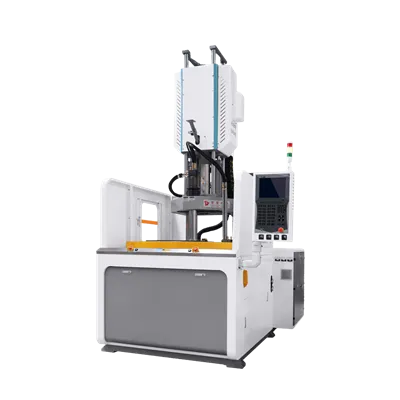
At the end of the day, production efficiency isn’t just about how fast a machine can make a part—it’s about how much good parts you get at the lowest cost, with the least downtime. Slide table vertical injection moulding machines deliver that better than most other models on the market right now. If you want to chat about your specific production needs, run numbers for your parts, or see what a slide table could do for your shop, hit us up for a consultation. We don’t do one-size-fits-all pitches, we work with you to figure out the exact efficiency you can expect for your line. Let’s make your production run smoother, faster, and more profitable.
Vertical Silicone Injection Machine References: 1. Society of Plastics Engineers (SPE) Injection Molding Efficiency Report, 2022. 2. Industrial Machine Maintenance & Productivity Journal, Vertical vs. Horizontal Injection Molder Comparison, 2023. 3. Global Manufacturing Efficiency Benchmarking Consortium, OEE of Common Production Machinery, 2024.
Guangdong Baizan Intelligent Equipment Co., Ltd.
We are one of the most professional slide table vertical injection moulding machine manufacturers and suppliers in China. We warmly welcome you to buy customized slide table vertical injection moulding machine at competitive price from our factory. If you have any enquiry about pricelist and quotation, please feel free to email us.
Address: No.8, Jianye Road, Dahuai Town, Enping City, Jiangmen City, Guangdong
E-mail: wjx@baizanjx.com
WebSite: https://www.baizanplast.com/
