If you’ve ever dealt with scoliosis, you know how tricky it is to find support that actually works. For anyone with a sideways curve in their spine (that’s basically scoliosis, for the uninitiated), daily stuff like sitting at a desk, driving a car, or even binge-watching a show can turn into a back pain nightmare. And if you’ve scrolled for solutions lately, you’ve probably seen memory foam lumbar support popping up left and right. The big question I get all the time from customers is: “Can I use one of these if I have scoliosis?” As someone who’s been selling memory foam lumbar supports for years, I’ve heard every angle, from people terrified a cushion will make their curve worse, to others who swear it’s the only thing keeping their back from spiking. Let’s break this down straight, no fancy jargon, just what actually works—and what to skip. Memory Foam Lumbar Supports
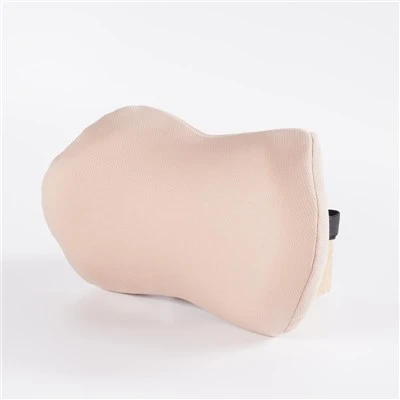
First, let’s get one thing clear: scoliosis isn’t one-size-fits-all. It’s a condition where the spine curves side to side, and it looks totally different from person to person. Some people have a mild curve that never causes pain, others have a more severe curve that affects their posture, mobility, and comfort. Because of that, there’s no universal rule for “can I use a memory foam lumbar support?” But here’s the science part that matters: memory foam, when it’s the right kind, isn’t going to mess with your spine’s curve—actually, it might help. Wait, why? Lumbar supports are meant to target the lower back, right? That’s where most of the discomfort for scoliosis folks tends to live, even if the curve is higher up. The lower back’s natural inward curve (lordosis) is often thrown off by scoliosis, leading to slouching, which makes the pain way worse. A good memory foam lumbar support cradle that lower back, pushing it into that natural curve instead of letting you hunch. That’s a win, right? But not all memory foam is created equal. You can’t just grab the first cheap cushion off Amazon and hope it works for scoliosis.
Let’s talk about what makes a memory foam lumbar support scoliosis-friendly. First, firmness. This is non-negotiable. If the foam is too soft, it’ll collapse under your weight, do nothing to support your back, and you’ll end up slouching even more. If it’s too hard, it’ll dig into your spine, cause pressure points, and make your curve worse. For people with scoliosis, we shoot for medium-firm memory foam—firm enough to hold its shape, soft enough to contour to your unique curve. I test every single one of our cushions on people with different curve types, and medium-firm is almost always the sweet spot. Too many cheap brands use super soft foam to cut costs, and that’s exactly what you want to avoid. You need something that doesn’t sink like a puddle, but also doesn’t feel like a brick pressing into your back.
Next, shape matters. Scoliosis means your spine isn’t straight, so a generic flat lumbar support is never going to work. Our memory foam lumbar supports are contoured specifically to fit the natural S or C curve of the lower back. But wait, we also make a couple of versions for different curve directions—like, some scoliosis curves are left-sided, some right-sided. If you pick a support that doesn’t match your curve, you’re going to put uneven pressure on your spine, which will make pain worse. That’s why we always tell customers to measure their curve briefly (it’s super easy, I’ll walk you through it quick: stand straight, run your hand along your spine, mark the peak of the curve, then check if it’s left or right) before picking one. It takes 2 minutes, and it makes all the difference. Some people try to force a one-size-fits-all cushion, and they end up frustrated because it doesn’t support their unique spine.
Now, the big caveat: when a memory foam lumbar support isn’t a good idea. If you’re in the middle of a severe scoliosis flare-up, where the pain is constant and you’re having trouble moving, don’t just grab a cushion and go to town. You should check in with your doctor first. Severe curves (over 40 degrees, usually) need professional guidance—some people need braces, physical therapy, or even surgery, and adding a lumbar support without that input might not be the right move. Also, if you’re using a memory foam cushion as a replacement for proper medical care, that’s a mistake. A lumbar support is a tool to make daily sitting more comfortable, not a fix for scoliosis itself. That’s a common misconception we deal with—people think our cushion will “cure” their curve, which it won’t. But it will make sitting tolerable, which is a huge win for anyone who has to work at a desk or drive for long hours.
I’ve seen this first-hand, too. Last year, a customer came to us who had idiopathic scoliosis (that’s the most common type, no known cause) and a 35-degree curve in her lower back. She’d tried a bunch of lumbar supports before, all of which were too soft and left her slouching more. She tried our medium-firm, contoured memory foam one, and a week later she sent a message saying she could sit at her desk for 4 hours without the stabbing pain she used to get. Another guy I talked to had a left-sided thoracic curve (higher up, near the shoulders) and said our lumbar support took pressure off his lower back, which was always compensating for the curve higher up. Those are the stories that make me love this job. But I’ve also had customers who bought a cheap, soft memory foam cushion, tried it, and said it didn’t work—because it wasn’t the right type for their scoliosis. So it’s not the product, it’s how you pick it.
Wait, what about memory foam heat? I know some people complain that memory foam gets too hot and sweaty, especially if you’re sitting in a car or an office chair for hours. That’s a valid point, and it’s something we fixed with our cushions. We add a breathable, moisture-wicking cover that keeps air flowing, so you don’t end up with a back soaked in sweat by the end of the day. For people with scoliosis, if you’re already uncomfortable, sweating more just makes the whole experience worse. No one needs that extra frustration. And the foam itself is ventilated, so it doesn’t trap heat like old-school memory foam used to. That’s a small detail, but it makes a huge difference in long-term comfort.
Another thing to consider: posture habits. A memory foam lumbar support is only as good as your posture when you’re using it. Even the best cushion won’t help if you’re slouching, hunching over your phone, or sitting with your feet dangling off the chair. For people with scoliosis, slouching can make the curve more pronounced over time, so the support is there to remind you to sit upright. It’s like a gentle nudge, not a magic fix. Pairing the cushion with small posture tweaks—like keeping your shoulders back, your feet flat on the floor, and your screen at eye level—will make the support work way better. I always tell customers, don’t just rely on the cushion, use it as a tool to build better sitting habits.
Let’s clear up a myth I hear all the time: “Memory foam is too soft to support a spine with scoliosis.” No, that’s only true if it’s the wrong density. Medium-firm memory foam is supportive, not soft. It holds your back in place without being rigid. I like to compare it to a good mattress: a firm mattress is bad for back pain? No, a mattress that’s the right firmness for your spine is what matters. Same thing here. A cheap, thin memory foam cushion is like a bad mattress—it doesn’t support you. Our memory foam lumbar supports are 3 inches thick, so they have enough density to hold up, but still contour to your curve. That thickness is another key point—any cushion thinner than 2 inches won’t give you enough support, no matter what it’s made of.
So, should you use a memory foam lumbar support if you have scoliosis? The short answer is: yes, if you pick the right one. Medium-firm, contoured, thick enough, breathable, and matched to your specific curve. But there are exceptions—if you have a severe, untreated curve, or if you’re in a lot of pain, check with your doctor first. This is especially important for teens whose spines are still growing—if you’re a young person with scoliosis, you definitely want to run any new support by your orthopedist to make sure it’s not going to affect your curve as it develops.
I can’t tell you how many times a day I get a message from someone with scoliosis asking if our cushions are safe. The answer is almost always yes, as long as you use it correctly. We’ve had customers with curves ranging from mild to moderate, and most of them say it’s one of the best comfort investments they’ve made. For people who have to sit for work, drive long distances, or even just sit on the couch to watch TV, a good memory foam lumbar support takes a huge amount of pressure off the lower back, which is where scoliosis pain usually shows up.
Now, a few tips if you do decide to go for it. First, measure your curve (like I said earlier, it’s super easy). Second, don’t buy the cheapest option—you get what you pay for. Cheap memory foam is often low density, breaks down in a few months, and doesn’t support your back. Our cushions last 3-5 years with regular use, so it’s a long-term investment in your comfort. Third, make sure it has a non-slip bottom, so it doesn’t slide around on your chair. Nothing’s more annoying than adjusting your support every 10 minutes, right? All our cushions have a grippy bottom that stays put, so you don’t have to fuss with it. And fourth, if you’re using it in a car or an office chair, adjust the angle so it’s pressing gently into your lower back, not too high or too low. That’s another small thing, but it makes all the difference.
At the end of the day, scoliosis management is all about what works for your body. What makes one person’s pain worse might be exactly what another person needs. A memory foam lumbar support isn’t for everyone—some people prefer mesh, some prefer foam, some prefer ergonomic designs. But for most people with mild to moderate scoliosis, a good memory foam option is a game-changer. It’s supportive, comfortable, and it fits into your daily routine without being a hassle.
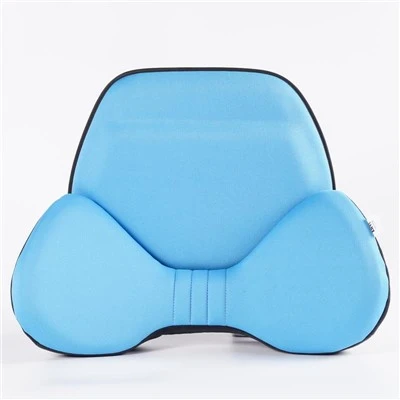
If you’ve been struggling with back pain from your scoliosis and want to try a memory foam lumbar support, we’ve got options for different curve types and firmness levels. We can help you pick the right one based on your curve size and direction, no guesswork involved. Whether you need it for your desk, your car, or your favorite couch, we’ve got you covered. To chat through what would work best for you, feel free to reach out—we’re here to answer all your questions, no sales pressure, just real advice from people who’ve worked with scoliosis customers for years.
Memory Foam Seat Cushion Reference:
- American Academy of Orthopaedic Surgeons. (2022). Scoliosis Management Guidelines.
- Journal of Orthopaedic & Sports Physical Therapy. (2021). Lumbar Support Use for Spinal Curvature Disorders.
- Memory Foam Technology and Postural Support. (2020). Journal of Materials in Design.
- National Scoliosis Foundation. (2023). Daily Comfort Tips for Living with Scoliosis.
Linyi Lujie International Trade Co., Ltd.
As one of the most professional memory foam lumbar supports manufacturers and suppliers in China, we’re featured by quality products and good price. Please rest assured to wholesale bulk durable memory foam lumbar supports in stock here from our factory.
Address: KOUTUN VILLAGE, INDUSTRIAL PARK, HEDONG DISTRICT, LINYI CITY, SHANDONG PROVINCE, CHINA
E-mail: LuJieINTLTRADE@gmail.com
WebSite: https://www.ljmemoryfoam.com/
