If you’ve ever stood on a construction site during the final push before a deadline, you know how easy it is for a hurried worker’s boot, a careless forklift driver, or even a dropped tool to nick, scrape, or crush a cable. As a fire-resistant cable supplier, I’ve spent years on job sites—knee-deep in dust, listening to the hum of heavy equipment—and I’ve seen firsthand how preventable physical damage during installation is the single biggest avoidable reason our products fail when they’re needed most. Fire-resistant cables aren’t just wires; they’re the lifelines that keep fire alarms blaring, sprinklers flowing, and emergency lighting on when every other system is down. A single scuff on their outer jacket or a kink in their armor can strip away the fire-resistant protection before a flame ever touches it. Today, I want to pull back the curtain on the practical, field-tested steps we teach our clients to protect these critical cables during installation—steps that come from decades of working side-by-side with electricians, foremen, and safety teams, not just spreadsheets. Fire-resistant Cable
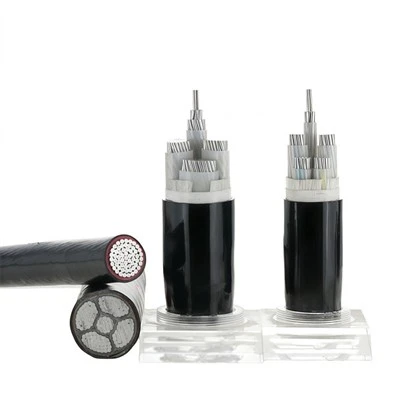
Let’s start with the most basic, and most overlooked, part: understanding what makes a fire-resistant cable different from a standard one. You can’t protect something if you don’t know what’s at risk. Our fire-resistant cables have a layered core: a mineral-insulated conductor in some models, a thin mica-based fire barrier in others, and a heavy-duty outer jacket—often cross-linked polyethylene (XLPE) or galvanized steel armor—designed to resist heat and impact. During manufacturing, we test each batch to survive 950°C flames for 3 hours, but that rating is only valid if the cable’s physical structure stays intact. A 1/4-inch gouge in the outer jacket during installation can breach that barrier, letting heat seep in and melt the internal conductor before the specified time is up. I’ve had clients call us months after a project was finished, panicking because an inspector found a damaged cable hidden in a ceiling cavity, and nine times out of ten, that damage happened during pulling, routing, or securing—not from a fire later. So the first rule of protection is: treat every fire-resistant cable like it’s already under fire, because a nick that small is all it takes to turn a compliant system into a failure waiting to happen.
Next up: routing that avoids the “high-risk zones” electricians and contractors often brush off. On most jobs, there are a few go-to paths—conduit runs along concrete floors, overhead trays near construction lift lines, corners where walls meet and pipes rub against wires. We don’t just tell teams to “be careful” here; we give them concrete adjustments. For example, never run fire-resistant cables along the floor’s baseplate where forklifts and material carts drive. Instead, mount trays 6 inches above the finished floor, or use floor conduit with 90-degree bends that are reinforced with metal clamps, so the cable never sits exposed where it can be run over. I remember a large hospital project we worked on in Chicago a few years back. The initial layout had fire-resistant nurse call cables routed along the warehouse floor, where construction teams were moving heavy oxygen tanks every day. Our on-site technician noticed this during a pre-install walkthrough and suggested re-routing them in a suspended tray 18 inches above the warehouse’s overhead beams, with every joint secured by dual nylon clamps spaced 12 inches apart. Three months later, a forklift did slip and dump a pallet of ceiling tiles on the warehouse floor—those re-routed cables didn’t get a single scratch. The original plan’s exposed floor cables would have been sliced in half instantly. Small, intentional routing changes aren’t just about avoiding damage in the moment; they’re about designing the installation to work with the cable’s strength, not against it.
Pulling cables is where 70% of installation-related physical damage happens, according to the National Fire Protection Association (NFPA) 70, the standard for electrical installations. It’s a rushed, high-stakes step: teams pull hundreds of feet of cable through conduit or trays in a matter of minutes, and if they don’t use the right tools, the cable bends too sharply or rubs against sharp metal edges. Let’s break this down into non-negotiable rules we hammer into every partner team. First, never use a wire fish tape that’s too stiff for the cable’s diameter. A 10-gauge fire-resistant cable has a minimum bend radius of 10 times its outer diameter—bend it tighter than that, and the internal insulation and fire barrier crack. I’ve seen electricians use a standard steel fish tape on a 20-foot run of 12-gauge fire-resistant cable, and by the time they pulled it through, the cable had a 2-inch kink that was barely visible on the surface, but rendered the mica fire barrier completely useless. We provide our clients with flexible fiberglass fish tapes made specifically for fire-resistant cables, and we teach them to use cable pulling lubricant that’s compatible with the cable’s outer jacket—silicone-based lubricant for XLPE jackets, not petroleum-based, which can eat away at the jacket over time. Second, every conduit or tray opening must have a rubber or plastic bushing. Sharp metal edges on the end of a conduit can slice through a cable’s outer jacket as it’s pulled, and we’ve even seen cases where the edge of a steel tray’s flange sliced through the armor of a fire-resistant cable before it was ever energized. These bushings cost pennies each, but they’re non-negotiable. Finally, never pull a cable by its conductor. Always use a pulling eye or a cable grip designed for fire-resistant cables—never tie a rope around the jacket, because the tension of the pull can stretch or tear the jacket, or even pull the conductor loose from its terminal. We’ve had clients skip this step, only to find a pulled cable later where the jacket was stretched 2 inches, and the fire barrier was compromised along the entire run.
Securing and supporting cables might seem like the final step before energization, but it’s another area where casual mistakes lead to damage over time. A cable that’s not supported properly will sag, and when it sags, it rubs against metal studs, pipes, or concrete floors. On suspended trays, we tell teams to space clamps no more than 3 feet apart for horizontal runs, and 5 feet apart for vertical runs—closer for larger-diameter cables, because they weigh more. We also teach them to never clamp a cable tightly enough that it deforms its round shape; the clamp should fit loosely enough to let the cable expand and contract slightly with temperature changes, but tight enough that it doesn’t sag. I remember a school project in Detroit where our team didn’t supervise the installation closely enough. The electricians clamped the fire-resistant exit sign cables too tightly along a metal wall, and over a 6-month period, the constant vibration from the school’s HVAC system rubbed the jacket until it frayed, exposing the internal conductor. By the time the school’s inspector caught it, we had to replace 150 feet of cable—something we could have avoided if the clamps were spaced properly and not over-tightened. Another rule: never secure fire-resistant cables to the same stud or pipe as non-fire-resistant cables. Standard PVC jackets on regular cables can degrade over time, and if they rub against a fire-resistant cable, they can scratch or nick its outer jacket, breaking that critical fire barrier.
Then there’s the less talked-about risk: damage from other trades. Construction sites are team sports, and electricians don’t work in a vacuum. Plumbers, carpenters, and HVAC technicians are all working in the same space, and a dropped pipe, a nail driven through a stud, or a drill bit slip can all damage fire-resistant cables. We’ve started including a “cable protection checklist” in every kit we ship, which we walk through with the site foreman before any cable is installed. The checklist includes marking all cable runs with bright, high-visibility tape before other trades start working, so no one accidentally drills or nails through a run. It also includes a mandatory pre-install meeting with all lead trades on site to map out where cables will go, and agree to flag any potential conflicts before they become problems. On a recent office building project in Miami, this meeting was a game-changer. The HVAC team had planned to run a new duct through a ceiling cavity that our fire-resistant fire alarm cables were already routed through. They shifted the duct path 12 inches to avoid the cable run, and we avoided what would have been a costly and dangerous mistake. This step isn’t about micromanaging other trades; it’s about communication, and it’s one of the most effective ways we’ve found to prevent damage that no electrician could have avoided on their own.
Finally, after installation, we tell our clients to do a full visual inspection—more than just a quick walkthrough. Every cable run should be checked for nicks, kinks, crushed armor, or exposed conductor. We use a simple rule: if you can’t run your finger along the cable’s entire length without feeling a bump, a gouge, or a sharp edge, it needs to be repaired or replaced. Minor scratches on the outer jacket can be fixed with a heat-shrink sleeve designed for fire-resistant cables, but any damage that penetrates the jacket or the fire barrier means the cable’s fire rating is compromised, and it has to be replaced. I’ve had clients try to patch a small nick with electrical tape, and we always tell them that’s not enough. Electrical tape won’t seal out moisture, and it won’t reinforce the jacket enough to protect the fire barrier during a fire. A proper heat-shrink sleeve is the only approved fix for minor surface damage, and even then, it can only be used on damage that doesn’t affect the internal layers.
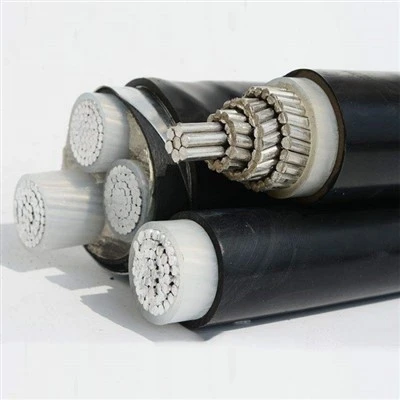
At the end of the day, protecting fire-resistant cables during installation isn’t about following a list of arbitrary rules—it’s about understanding that these cables are meant to save lives, and every step we take to protect them during installation is a step toward making sure they work when it matters most. As a fire-resistant cable supplier, our job isn’t just to sell high-quality products; it’s to partner with our clients to make sure those products are installed correctly, because a cable that’s damaged during pulling or routing is just as useless as a standard cable when a fire hits. If you’re working on a project that requires fire-resistant cables, or if you have questions about protecting your cable runs during installation, we’re here to help. We provide on-site technical support, custom training for your installation teams, and all the specialized tools and materials you need to get the job done right. Don’t wait until an inspector flags a damaged run or a fire drill reveals a flaw—reach out to us to discuss your project’s needs and how we can support your team every step of the way.
Aluminum Alloy Cable References
National Fire Protection Association. (2023). NFPA 70: National Electrical Code. Quincy, MA: National Fire Protection Association.
Underwriters Laboratories. (2022). UL 2196: Standard for Safety for Fire-Resistant Cables. Northbrook, IL: Underwriters Laboratories Inc.
International Code Council. (2021). International Building Code. Country Club Hills, IL: International Code Council.
Hebei Fengbo Electrical Equipment Co., Ltd.
As one of the most professional fire-resistant cable manufacturers and suppliers in China, we warmly welcome you to wholesale durable fire-resistant cable for sale here and get quotation from our factory. All custom made cables are with high quality and competitive price. Also, OEM service is available.
Address: No.100 meters south, East Ring Road & Wei’er Road intersection, Huang’erying East Village, Jiajiakou Town, Ningjin County, Xingtai City, Hebei Province, China
E-mail: fonbocable@gmail.com
WebSite: https://www.fonbocable.com/
