Hey there, thanks for stopping by! If you’ve ever browsed solar street lights for your project—whether it’s a parking lot, a rural community road, or a commercial complex—you’ve probably come across split solar setups. You know the ones: the solar panel, battery storage, and LED light head are separate, not all crammed into one pole. As a supplier of these split systems, I get a ton of questions about them, but one that pops up all the time is: “Do split solar street lights even need to be grounded?” Split Solar Street Light
I’ll cut to the chase here—no confusing jargon, just real talk from someone who’s been in the game for years. Short answer: Most of the time, yes—but not in the way you might think, and not always the same way as traditional grid-tied street lights. Let me break this down, and by the end, you’ll know exactly what you need to ask when you’re picking out your setup.
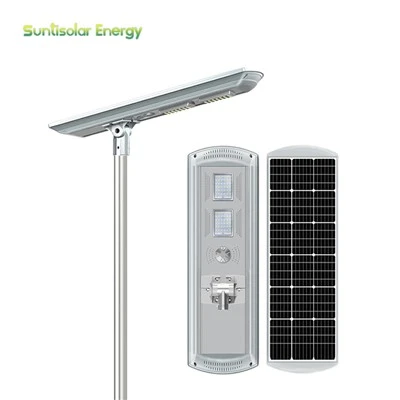
First, let’s recap what a split solar street light is, just to make sure we’re on the same page. Unlike the all-in-one (integrated) solar light where the panel, battery, controller, and light bolt right to the top of the pole, split systems spread those parts out. The solar panel might sit on a pole 10-15 feet away from the main light pole, out where it gets unobstructed sun. The battery box is usually on the ground, or mounted low on a pole, and the LED light head is on its own separate pole too. That separation is why they’re called “split”—it’s also why people get confused about grounding.
Traditional street lights run on grid power, so they’re hardwired to the electrical system, and grounding is non-negotiable—for lightning, for electrical faults, to keep people from getting shocked if a wire frays. But solar street lights run on batteries, right? No live grid connection, so is grounding even needed? That’s where the split system is a little trickier than the integrated one. Integrated solar lights have all their components close together, so there’s less risk of stray electrical current. But split systems have wires running between the panel, battery, and light head—those wires can be 20, 30, even 50 feet long. That’s more surface area for issues.
Let’s start with the big one: lightning protection. If you’re setting up street lights in areas that get frequent thunderstorms (like most places, honestly), lightning is the main electrical risk. Even if your split solar system is mostly battery-powered, the solar panel is a tall metal object sitting out in the open, catching every lightning strike that comes near. If that panel isn’t properly grounded, a lightning strike could travel through the wires to the battery, and fry the controller, the battery bank, or even the LED light head—way more expensive to replace than a simple ground rod. And not just the system itself: if a strike hits and the wire isn’t grounded, that electrical charge can build up on the metal pole holding the light, creating a shock hazard for anyone (or anything) that touches it. Even if it’s a public park, that’s a risk we can’t ignore.
Then there’s electrical fault protection. Let’s say a rat chews through a wire between the battery and the light head, or a wind storm yanks a wire loose where it’s connected to the panel. If that wire is carrying 12V or 24V DC power (which most split systems use), it’s low voltage, but that doesn’t mean there’s no risk. If a faulty wire comes into contact with the metal pole, that metal pole becomes energized. If someone leans on the pole while standing on wet ground, they could get a shock—even from a low voltage system, if there’s enough current. Grounding the system gives that stray electricity a safe path to the earth, instead of going through a person. Also, if you ever need to work on the light, grounding cuts down on static electricity that can damage sensitive components, like the battery’s circuit board.
But wait—what about integrated solar lights? Don’t they not need grounding? Well, technically, some small integrated ones (like the path lights for your backyard) don’t, because they’re low power and all components are sealed up. But commercial split solar street lights—like the ones you’d use for a whole road—are a different story. They have way more power, longer wires, and are exposed to way more weather and wear. So even if integrated ones skip grounding, split ones almost always need it.
Now, let’s talk about how you should ground a split solar street light, because there’s a right way and a wrong way here. A lot of people think you just stick a ground rod in the dirt next to the battery box, and that’s it. But for split systems, you need to ground all the separate metal parts: the solar panel’s mounting pole, the light head’s pole, and the battery box enclosure. Those three parts need to be connected with a grounding wire (usually a thick copper wire, 14 AWG or thicker) to a common ground rod. Wait—one ground rod? Not three? Yeah, that’s the right way. If you ground each part separately, you could end up with different electrical potentials (meaning one part is slightly more charged than another) which can cause issues with the controller or even start a small arc. Common ground, all parts tied together, is key.
Also, make sure the ground rod is installed correctly. It needs to be at least 8 feet long, driven all the way into the soil—if your area has rocky ground and you can’t drive it 8 feet, you can use two shorter rods tied together, but that’s a last resort. If you just leave a 3-foot rod sitting in loose dirt, it won’t work—no good ground connection means no way to bleed off that extra electrical charge. And never ground to a water pipe or a metal fence—those aren’t designed for electrical grounding, and you could end up with current running through the pipe, which is a hazard for plumbers or anyone using water.
I get it—extra grounding means extra cost and extra work when you’re installing the lights. Some customers ask me, “Can I skip grounding to save money?” Here’s the thing: I’ve been in this industry long enough to see what happens when you skip it. Last year, a small town in the Midwest ordered a dozen split solar street lights for their downtown road. They decided to skip grounding to cut costs. Six months later, a big thunderstorm rolled through, and lightning hit one of the panels. The ungrounded wire burned through, fried the controller on that light, and the surge damaged two other lights nearby. They ended up paying 3x what they would’ve spent on grounding to replace the parts, and they had to shut down a part of the road for a week while they fixed it. That’s not a cost savings—that’s a headache.
Another question I get: “What about battery-powered split lights that have no grid connection at all?” Same thing. Even if there’s no AC power coming in, the DC system still has current running through those wires, and lightning is still a risk. I’ve seen systems in Florida, where lightning is super common, that weren’t grounded—they’d lose 2-3 lights a year to surges. Once they added proper grounding, that number dropped to zero. It’s a small investment that pays off big in the long run.
Wait, are there any cases where a split solar street light doesn’t need grounding? Let’s be honest here—there are a few exceptions. If you’re using a tiny split solar light for a path in a dry, remote area that never gets thunderstorms, and it’s only for low foot traffic (like a backyard garden path with 1-2 people total), you might get away with skipping it. But even then, I still recommend it. A sudden storm can hit out of nowhere, and a single ground rod is super cheap. For commercial or municipal projects—where you have to follow electrical codes—grounding is almost always required, even if the code says “for lightning protection.” And most places, that code applies to any outdoor electrical system, solar or not.
Also, a quick note about modern split solar systems: some newer controllers have built-in surge protection. That’s a great safety feature, but it doesn’t replace grounding. Surge protectors just absorb a single surge—if you get a big enough lightning strike, the surge protector can only do so much. Grounding provides a permanent, safe path for all that extra electricity, so it doesn’t damage anything else. Think of it like this: a seatbelt is great, but you still need airbags. Surge protection is the seatbelt, grounding is the airbag.
Let me wrap this up with a practical takeaway, because I know a lot of you are out there shopping for these lights right now. If you’re installing split solar street lights for a commercial, municipal, or even a residential project that gets regular storms, do ground them. Do it the right way: one 8-foot ground rod tied to all metal components, use thick enough copper wire, and make sure the installer knows what they’re doing. If you’re a contractor working on a project, ask your supplier about the grounding requirements—good suppliers (like ours) will send you a simple installation guide that walks you through exactly what to do.
And if you’re still on the fence, or you have questions about which split solar street light is right for your space, reach out. I’m not just here to sell lights—I want you to get a setup that works for years, no headaches, no unexpected costs. Grounding might seem like a small detail, but it’s one that saves you a ton of trouble down the line.
Oh, one last thing—don’t forget to check your local electrical codes. Some areas have specific rules for outdoor solar systems, especially those used on public roads. Grounding might be mandatory there, so it’s better to check early than to have to redo everything later.
At the end of the day, split solar street lights are a great investment—they save money on electricity, they’re eco-friendly, and they last for years. But skipping grounding is one of the worst mistakes you can make with them. It’s not hard, it’s not expensive, and it keeps your lights working when you need them most.

If you’re looking for reliable split solar street lights, or you want to talk through your project needs, hit us up. We’ll help you pick the right setup, answer all your questions, and make sure you get everything you need for a safe, long-lasting installation.
Integrated Solar Street Light References:
- National Electrical Code (NEC) Article 690, 2023 Edition
- Solar Electric Power Association (SEPA), “Lightning Protection for Off-Grid Solar Systems,” 2021
- International Association of Electrical Inspectors (IAEI), “Grounding Requirements for Outdoor Low-Voltage Solar Lighting,” 2022
- U.S. Department of Energy (DOE), “Split Solar Street Light Installation Best Practices,” 2020
Yantai Xutai New Energy Technology Co., Ltd.
Yantai Xutai New Energy Technology Co., Ltd. is one of the most professional split solar street light manufacturers and suppliers in China. With a professional production team, we are able to meet the needs of the majority of our customers. Please rest assured to buy premium split solar street light made in China here from our factory.
Address: No.229, Tongshinan Road, Zhifu District, Yantai City, Shandong Province, China
E-mail: Joe.chu@suntisolar.com
WebSite: https://www.suntisolar.com/
