Hey there, gearheads, production managers, and anyone who’s ever stared at a machine and wondered why some parts just keep going while others bite the dust (literally, sometimes). Today we’re diving into something that’s been the backbone of every heavy-duty vehicle, wind turbine, and manufacturing line for decades: forged gears. And since we’re a forged gear supplier that’s been doing this for a minute, I’m gonna break this down like I’m explaining it to a buddy over a beer—not a textbook. Let’s cut to the chase. Forged Gear
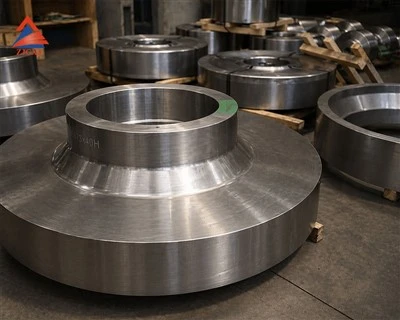
First off, what even is a forged gear? I know, I know—you’ve seen these circular, toothed things on everything from your pickup truck’s transmission to that giant bulldozer at the construction site. But “forged” is the key word here, right? Way too many folks mix up forged gears with their cast or machined counterparts, and that’s where the confusion starts. Let’s get the basics straight.
A forged gear is a power-transmission component made by hammering or pressing solid metal (usually steel, sometimes alloy, or even stainless steel depending on the job) into a precise toothed shape—instead of melting the metal and pouring it into a mold (that’s casting) or cutting teeth out of a big hunk of metal (that’s machining). Before you go, “Duh, that’s basic,” hear me out. The forging process isn’t just bashing metal with a big hammer; it’s a science, and that’s why forged gears are the workhorses of the industry.
Let’s walk through how we actually make one, since that’s the part most people don’t see. First, we start with a solid billet—like a big, round chunk of raw metal. No hollow molds here, no melted goop; this is dense, solid stock. Then we heat that billet up, not so much that it’s liquid, but enough that it’s pliable—like warm Play-Doh, but way tougher. Then we put it in a die, which is basically a custom metal mold carved with the exact shape of the gear we need (teeth and all). Then we either hit it with a massive forging hammer (think: thousands of pounds of force slamming down in milliseconds) or squeeze it with a hydraulic press that applies steady, intense pressure for a few seconds. Either way, the metal flows and fills every little detail of the die. No gaps, no weak spots from air bubbles, just metal shaped exactly how we want it.
Wait, but why go through all that trouble? Why not just cast a gear and call it a day? I get it—casting’s cheaper, faster for mass runs of simple shapes. But here’s the thing: when you forge metal, you’re rearranging its internal grain structure. Imagine a piece of steel as a bundle of straws. If you cut the straws (that’s machining, or even casting sometimes), they snap easy. But if you bend and shape the straws to follow the gear’s tooth profile (that’s forging), they’re way stronger. The grain lines of the metal align perfectly with the stresses the gear will face when it’s working—twisting, pressure, heavy loads. That’s the secret sauce. Cast or machined gears have grain lines that are messy or cut, so they’re way more prone to cracking, wearing out fast, or failing when you need them most.
Let’s put that in real terms. If you need a gear for a lawnmower that only runs 10 hours a week, a cast gear might work fine. But if you need a gear for a wind turbine that’s spinning 24/7, 365 days a year, in wind, rain, and freezing temps? You’re gonna need a forged gear. The same goes for construction equipment, heavy-duty trucks, mining machinery—any job where a part’s gonna take a beating and not quit. We’ve had customers come to us because their old cast gears kept failing every 6 months; switch to forged, and they’re good for 10+ years. That’s not a hype line—it’s the numbers we see every day.
Now, not all forging is the same, either. There’s open-die forging and closed-die forging—those are the two main types, and they matter a lot for gear making. Open-die is when you hammer a big billet between two flat dies, shaping it bit by bit. We don’t usually do that for standard gears, though—closed-die is where we use that custom die I mentioned earlier, the one with the exact gear shape. Closed-die forging gives us tighter tolerances, more precise teeth, and way less waste metal. That’s what we use 99% of the time for the gears we supply, because our customers need parts that fit perfect, work smooth, and don’t waste money on extra material.
Also, let’s talk about the post-forging steps, because the forging isn’t the end of the road. After we pull the gear out of the die, it’s still hot, a little rough around the edges, and not quite as hard as it needs to be. So we do things like heat treatment—quench it in oil or water, then temper it to get the right balance of hardness and toughness. We machine the teeth to a super tight tolerance (even after forging, we do a little finish machining to make sure they mesh perfectly with other gears). Sometimes we add a surface coating for corrosion resistance or extra wear. But even with all that extra work, the core strength from forging is still there—that’s the baseline that makes the gear reliable.
I know what some of you are thinking: “Forged gears are expensive, right?” Yeah, upfront they might cost a few bucks more than cast or basic machined gears. But let’s do the math. If a cast gear costs $50 and needs replacing every 6 months, that’s $100 a year. A forged gear might be $150, but it lasts 5 years—so that’s $30 a year. Way cheaper long-term, and way less downtime. Time is money, especially in manufacturing. If your machine is down because a gear broke, that’s lost production, missed deadlines, pissed-off clients. Forged gears eliminate most of that risk. We tell every customer that comes to us: buy right, buy once. That’s our motto, and it’s stuck around for a reason.
Wait, but who actually uses forged gears? Let’s name some real jobs, not just generic “heavy machinery.” The wind energy industry is a huge one. A single wind turbine’s gearbox has 3+ forged gears, and if one fails, you’re looking at a $100k+ repair (not to mention lost energy revenue). Oil and gas—pump jacks, drilling rigs, all that stuff needs gears that can handle extreme pressure and harsh environments. Agricultural equipment too—farmers can’t afford their combine’s transmission gear to break mid-harvest. Even performance cars—those guys push their engines way harder than regular drivers, so forged gears in the transmission or differential are non-negotiable for racing or street performance.
We’ve worked with all of these folks over the years, and one thing we’ve noticed: the best customers aren’t just looking for a “gear part number.” They know the difference between a cheap part and a reliable one, and they prioritize quality over short-term cost. That’s why we don’t do cookie-cutter parts. Every gear we make is tailored to the customer’s specific needs—load capacity, speed, environment, whatever. If someone needs a gear that works in -40°F weather? We use a different alloy steel than if they need one for a warm, dry factory. If it’s a high-torque application? We adjust the forging pressure and heat treatment to make it extra tough.
Let’s bust another myth too: people think forged gears are only big, heavy parts. Nope. We make tiny forged gears for things like medical devices and small robotics too. Even those need strength and precision—you don’t want a prosthetic hand’s gear failing mid-use, right? Forging works for any size, as long as you have the right die and equipment.
Now, since we’re a forged gear supplier, let’s be real about what we do (and what we don’t do). We don’t make every gear for every single application. If you need a tiny gear for a kid’s toy, a cast one’s probably fine, and we’re not the cheapest option for that. But if you need a gear that’s gonna be under stress, run 24/7, last years, and not let you down? That’s our wheelhouse. We’ve got the equipment, the crew (they’ve been in this game for 10, 20+ years, so they know their stuff), and the quality checks to make sure every gear leaving our shop is up to par. We do 100% inspection on every batch—check for cracks, check tooth tolerances, check hardness—because one bad gear going out is bad for us and bad for our customer.
I’ve been in this industry for 12 years now, and I’ve seen way too many machines go down because someone cut corners on gear quality. It’s never a big, obvious failure—usually it’s a tiny crack that started in the grain structure, from a weak cast or machined gear, that grew over time and finally gave out at the worst possible moment. Forging eliminates that risk at the source. That’s why forged gears aren’t just a product—they’re a solution to “will this part hold up when it matters?”
So if you’re reading this and you’re the person responsible for buying gears at your company, or maintaining that old bulldozer you use on weekends, or designing a new piece of machinery—take a second to think about the last time a gear failed you. Was it a cast part? A machined part? If yes, maybe it’s time to switch to forged. It’s an investment, but it pays off in less downtime, lower replacement costs, and way less stress.
We get it—you’re busy. You don’t have time to test a bunch of different gear suppliers to find one that actually delivers on quality. That’s where we come in. We don’t do generic parts; we work with you to understand your exact needs, recommend the right material and forging process, and deliver gears that fit perfect and work as hard as you need them to. No sales fluff, no hidden fees, just solid forged gears and honest advice.

If you’re tired of gears that break too soon, or you’re working on a new project that needs a reliable power-transmission core, hit us up to connect for a purchase negotiation. We’ll walk you through the process, answer any questions you have, and give you a quote that makes sense. At the end of the day, we’re just another group of gearheads that love making parts that keep the world moving. Why work with anyone less?
Forged Ring References
- Forging Industry Association. (2022). Forging Fundamentals: Grain Structure & Part Strength.
- American Gear Manufacturers Association. (2021). Gear Materials & Manufacturing Processes: A Comparative Analysis.
- Machinery’s Handbook. (31st ed.). Industrial Press. (2020). Forged Gears: Design, Applications, and Performance Specifications.
- Wind Energy Maintenance Journal. (2023). Critical Components for Offshore Wind Turbine Gearboxes.
Zhangjiagang Xinjie Forging Co., Ltd.
As one of the most professional forged gear manufacturers and suppliers in China, we offer a wide range of products with superior quality. Please rest assured to buy customized forged gear at competitive price from our factory. Also, OEM service is available.
Address: No.8, Longtanwan Road,Hexing, Jinfeng
E-mail: xinjie@xinjiecasting.com
WebSite: https://www.xinjieforging.com/
