If you’ve ever spent a weekend fixing a dripping faucet, or watched a manufacturing line grind to a halt because a hydraulic line sprung a leak, you already know how critical O seal rings are. As a supplier who’s spent 12 years sourcing, testing, and shipping these tiny, unassuming rubber (or plastic) rings to everything from agricultural equipment makers to pharmaceutical packaging lines, I can tell you this: the only way to guarantee they’ll do their job is to test their sealing performance properly. Too many buyers I’ve worked with assume a ring’s size or material is enough, but I’ve seen off-spec rings that passed visual inspection fail spectacularly in real-world conditions. That’s why today, I’m pulling back the curtain on how our team tests every batch of O seal rings before they leave our warehouse. O Seal Ring
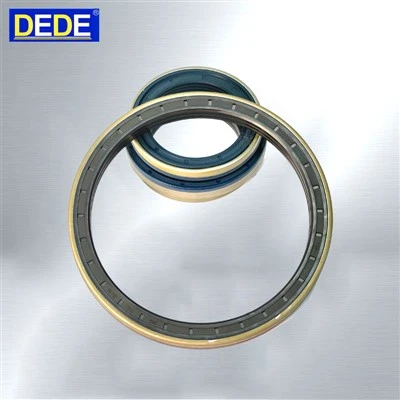
First, let’s start with what sealing performance actually means for an O seal ring. It’s not just “stopping leaks”—it’s maintaining a consistent, tight barrier between two mating surfaces, even when those surfaces are exposed to extreme pressure, temperature swings, or harsh chemicals. A ring that works for a low-pressure water pump might disintegrate in a hydraulic jack, so our testing is tailored to a customer’s application, but there are standard, non-negotiable steps we run on every single SKU we carry. I’m not talking about complicated lab tricks reserved for aerospace clients—most of these tests are repeatable, affordable, and give actionable data that anyone can use, whether you’re a maintenance tech or a production engineer.
The first step in our process is dimensional inspection, and it’s way more important than you might think. I’ve had a customer send us a batch of rings that looked identical to our specs, but when we measured them, we found their cross-section was 0.2mm thinner than it should be. That might not sound like much, but an O seal ring depends on being slightly compressed when installed to create that seal. If the cross-section is off, the compression is too low, and you get a leak—even if the inner and outer diameters are perfect. We use digital calipers with a 0.01mm precision limit, not just a manual tool that’s off by half a millimeter, and we test 5% of every batch (minimum 20 rings, no exceptions) to check cross-section, inner diameter (ID), outer diameter (OD), and surface finish. Rough or blemished surfaces can catch on mating parts, tear during installation, or create tiny gaps where fluid can seep through, so we reject any ring with a surface roughness over 0.8 μm—something we confirm with a surface profilometer, not just a quick wipe with a cloth.
Next up is static pressure testing, which is the most basic but most reliable test for static seals (think: the O ring between two flanges that don’t move during operation). We don’t just hook a ring up to a pressurized line and wait for it to leak—we control every variable to mimic real use. First, we install the ring in a standardized test fixture that matches the exact dimensions we supply, using the same groove dimensions (width, depth) we specify for customers. That’s a mistake a lot of smaller test labs make: they use generic fixtures, but an O ring that compresses 25% in a groove designed for that compression will fail if you test it in a groove built for 30% compression. Once installed, we fill the fixture with the appropriate test fluid—usually mineral oil for general hydraulic applications, water for plumbing, and phosphate ester fluid for aerospace parts—and apply pressure in gradual increments, starting at 10% of the ring’s rated pressure and moving up to 150% of its maximum working pressure. We hold that peak pressure for 10 minutes, monitoring for any drop in pressure (which would mean a leak) or visible seepage around the ring. For most general-purpose O rings, we don’t see any failures here, but we once had a batch of nitrile rings that passed dimensional checks but failed at 120% of rated pressure—turns out their compound had been mixed with too much filler, making it brittle and unable to handle compression. We rejected that entire batch before it ever reached our customer, and saved them a lot of downtime.
For dynamic O rings—those that are moving, like the ones in a piston or a rotating shaft—static testing isn’t enough. You need to test how they perform when they’re flexing and moving, because that’s when most failures happen. Our dynamic testing rig is designed to replicate linear reciprocating motion (for pistons) or rotational motion (for shafts), and we run it at varying speeds to match customer applications. We test pressure too, up to the same 150% peak we use for static testing, and we monitor two things: first, how much friction the ring generates, because too much friction causes wear and overheating, and second, how much fluid seeps past the ring over a set number of cycles. A good dynamic O ring will have consistent low friction and less than 0.1mL of leakage per 100,000 cycles. We once supplied a set of O rings to a farm equipment maker that was having constant leaks in their hydraulic lift cylinders; when we tested their existing rings on our dynamic rig, we found they were seeping 0.8mL per 100,000 cycles at just 500 RPM. Our tested rings? They seeped 0.09mL, which is well under the threshold, and we got a note a month later saying their downtime on the line dropped by 70%. That’s the kind of win that makes all the testing worth it.
Temperature testing is another critical step that’s often overlooked. O seal rings are made of elastomers or thermoplastics, and every material has a temperature range where it works best. A nitrile rubber ring rated for -40°F to 250°F will get hard and brittle at -50°F, or soft and gummy at 275°F—both of which kill sealing performance. We use two types of temperature testing: low-temperature brittleness testing and high-temperature compression set testing. For low temp, we freeze rings to their minimum rated temperature, then bend them around a 3mm mandrel and check for cracks. For high temp, we compress rings by their standard installation amount, hold them at their maximum rated temperature for 70 hours, then release the compression and measure how much they deform. Compression set over 15% means the ring won’t bounce back to its original shape once installed, so it can’t create the necessary seal. We once had a batch of EPDM rings that looked perfect for a food processing application (resistant to cleaning chemicals, easy to sanitize) but failed the high-temperature compression set test at 300°F—they deformed so much, they wouldn’t seal after being heated for 10 hours in a test. We ended up switching to a different EPDM compound that passed, and the customer still uses that exact SKU today.
Finally, chemical compatibility testing, which is non-negotiable for any application where the O ring will be exposed to harsh fluids—petrochemicals, cleaning agents, food acids, even some pharmaceuticals. We test this by submerging rings in the customer’s specific working fluid (or a standard fluid that matches it, if we don’t have their exact mix) at their operating temperature for 168 hours (one week). After that, we weigh the rings, measure their dimensions, and check their hardness. A proper sealing ring will only change in weight by 5% (gain or loss) and hardness by 10 Shore A points. If it gains more than that, it’s absorbing too much fluid and swelling, which can cause it to get stuck in its groove or squeeze out under pressure. If it loses too much weight, it’s dissolving or breaking down, and it won’t last a week. I remember a customer in the oil and gas industry who was using a standard O ring that kept disintegrating in their wellhead pumps. We tested their rings in the crude oil they were pumping, and they lost 18% of their weight in a week—way over our limit. We switched them to a fluorocarbon (Viton) ring, which only gained 2% weight, and that solved their problem. They’ve been a repeat customer for 8 years now.
All of this testing isn’t just for our own quality control—we share every single test report with every customer who asks, because we want them to have confidence that the rings we supply will work in their application. Too many suppliers cut corners on testing to save money, and I’ve seen what happens: customers get stuck with bad parts, lines go down, reputations get hurt. As someone who’s been in this industry long enough to know a bad O ring when I see one, I take this responsibility seriously.
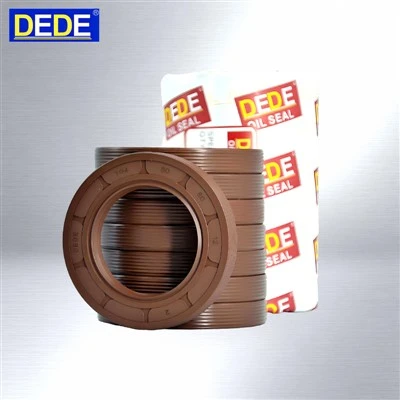
If you’re reading this because you need O seal rings for your next project, or you’re tired of constant leaks and downtime that’s eating into your profits, don’t settle for untested rings. Our team specializes in helping customers find the right ring for their application, and we can work with you to test any batch to your specific requirements—whether that’s custom sizes, unique material compounds, or rigorous performance standards. We don’t just sell rings; we make sure they seal, every single time.
EG Seal References
- O’Connor, R., & Bryan, J. (2018). Seals and Sealing Handbook (6th ed.). Elsevier.
- Society of Automotive Engineers (SAE). (2020). Standard J200: Elastomeric Seals for Automotive Fluid Systems.
- American Society for Testing and Materials (ASTM). (2021). Standard Test Methods for Rubber Property—Compression Set, Method B (ASTM D395).
- Hydraulic Institute. (2019). Hydraulic Seal Design and Application Guide.
DEDE SEAL Co., Ltd.
DEDE Seal Co., Ltd. is one of the most experienced o seal ring manufacturers and suppliers in China for over 35 years, featured by quality products and good price. Please feel free to buy bulk customized o seal ring made in China here from our factory. Welcome to contact us for pricelist.
Address: Hunan Road, Pudong New Area, Shanghai, China
E-mail: info@dedeseal.com
WebSite: https://www.dedesealing.com/
